
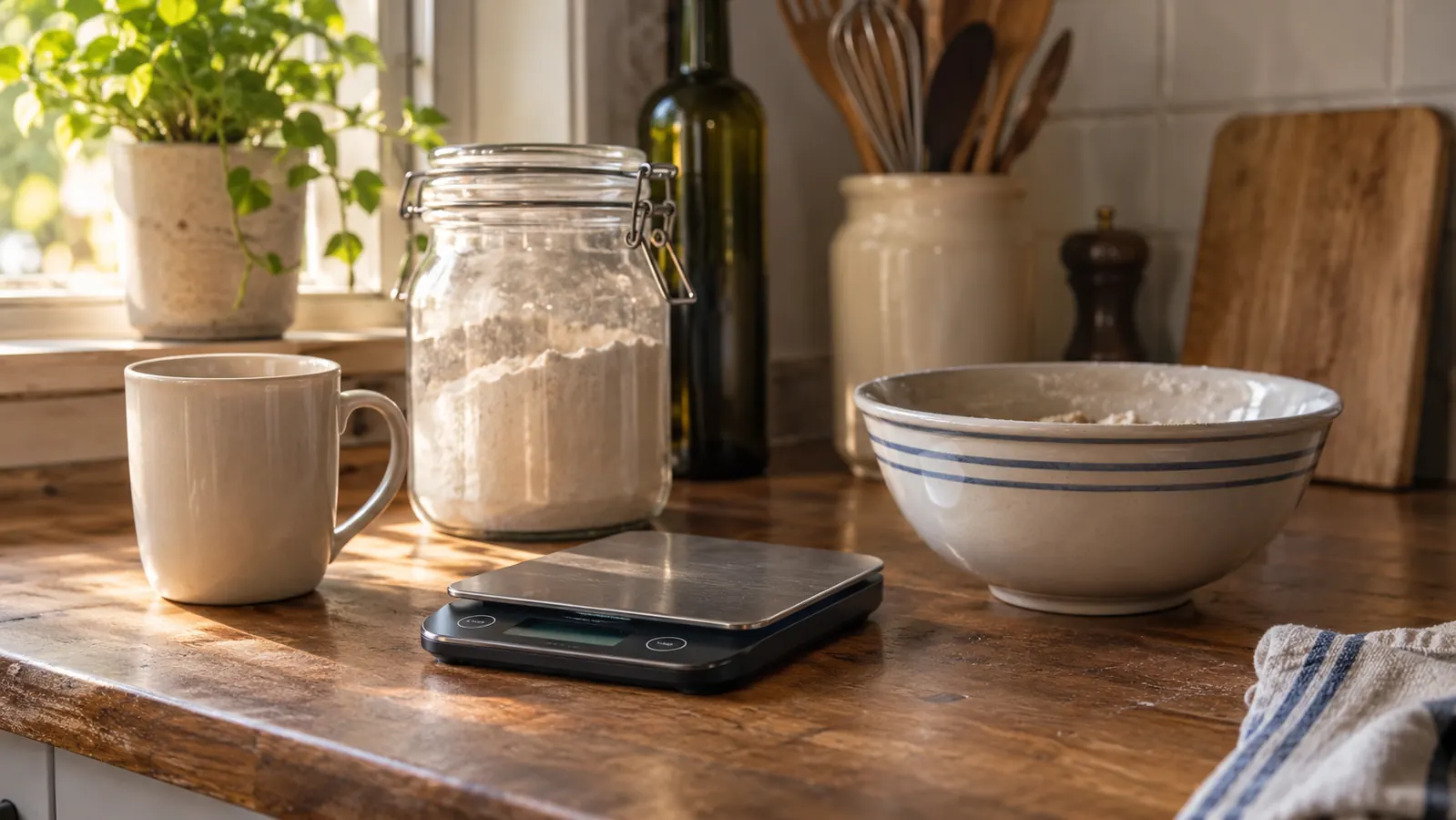
Here is the least glamorous thing in my kitchen that has changed how I cook: a small digital scale that lives on the counter next to the salt. I bought it to weigh portions. I kept it because it turns out I had no idea what a portion was.
I'm Carla Benningfield. I'm 61, a retired school librarian in Asheville, North Carolina. I live with my husband Dale and a seventy-pound retriever-shepherd mix named Mabel, who insists on a long walk every single morning whether or not I have finished my coffee. My doctor flagged my blood pressure in my late fifties, and I started paying attention to what I was actually eating, which is a different thing from what I thought I was eating. The Etekcity food scale has been on my counter for months now, used daily, and this is the honest accounting: the good, the tedious, and the one thing it will not do for you.
The Quick Verdict
A small, plain, honest tool that does one job well: it tells you what you are actually eating. Months in, it is still on my counter, which is more than I can say for most things I have bought for this kitchen.
Amazon Check Today's Price →You cannot fix a portion you have never actually measured
The Etekcity weighs up to 11 pounds in 1-gram steps, tares back to zero with one press, and wipes clean with a damp cloth. Two AAA batteries come in the box, so it works the minute you take it out.
Amazon Check Today's Price on Amazon →How I've Used It
The scale sits between the salt cellar and the coffee grinder, which means I walk past it forty times a day. That placement matters more than any feature on the box. A scale in a drawer is a scale you do not use. I know because I owned one for a year and used it perhaps six times.
A normal morning goes like this. Cereal bowl on the surface, press the button, wait for zero, pour until the number reads what the side of the box calls a serving. Then the yogurt container goes on and I press the button again, so the yogurt counts itself instead of being added to the bowl's weight. Coffee beans get weighed because Dale measured his once and now considers himself an expert. Mabel's kibble gets weighed because our vet told us seventy pounds is a number worth defending, and Mabel has opinions about portion sizes that do not favor restraint.
Before the scale, I used measuring cups for about a year and a half. It seemed reasonable. A cup is a cup. But cups measure volume, and food is not volume. A cup of shredded cheese depends entirely on how hard you packed it, and I packed it hard every time. A cup of spinach is barely anything while a cup of rice is a real amount. I remember standing at the counter one evening with a cup of brown rice, pressing it down with the back of a spoon so it would sit level, and realizing I had been doing that every night without ever thinking about it. The scale ended the argument, because a number does not care how hard you press.
I am not precise about everything. I do not weigh lettuce. I do not weigh the handful of almonds I eat standing at the sink at four in the afternoon. But the foods that used to quietly expand, rice, pasta, cheese, peanut butter, oil, all of those go on the surface now. That has been the difference between tracking that works and tracking that is fiction.
The Tare Button Does the Real Work
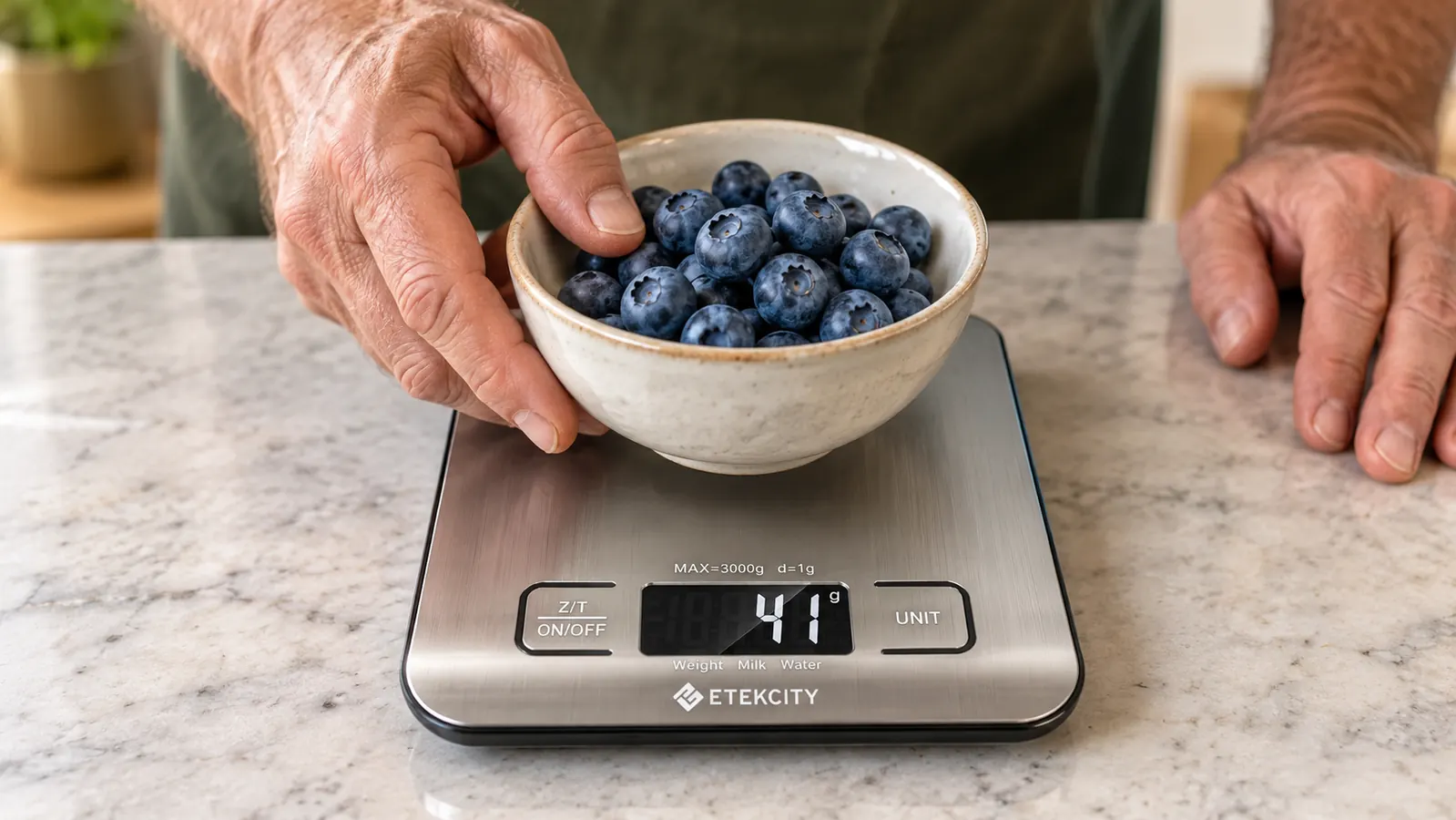
When people ask what to look for in a kitchen scale, I say the tare button, and they look at me like I have mentioned a carburetor. Tare simply means reset to zero. You set the bowl down, press the button, the display goes back to zero, and now the scale is only counting what you add on top. The tare function is listed on this model, and it is the single reason the thing earns its counter space.
Without it, you are doing subtraction in your head while holding a jar of something sticky. With it, the jar goes on the surface, you press tare, you scoop out what you want, and the display reads out a negative number telling you exactly how much left the jar. That last trick is the one I use most, and it is the reason I finally stopped guessing at oil. Two tablespoons of olive oil poured freehand is a very different amount than two tablespoons poured onto a scale, and I had been pouring the larger one for years.
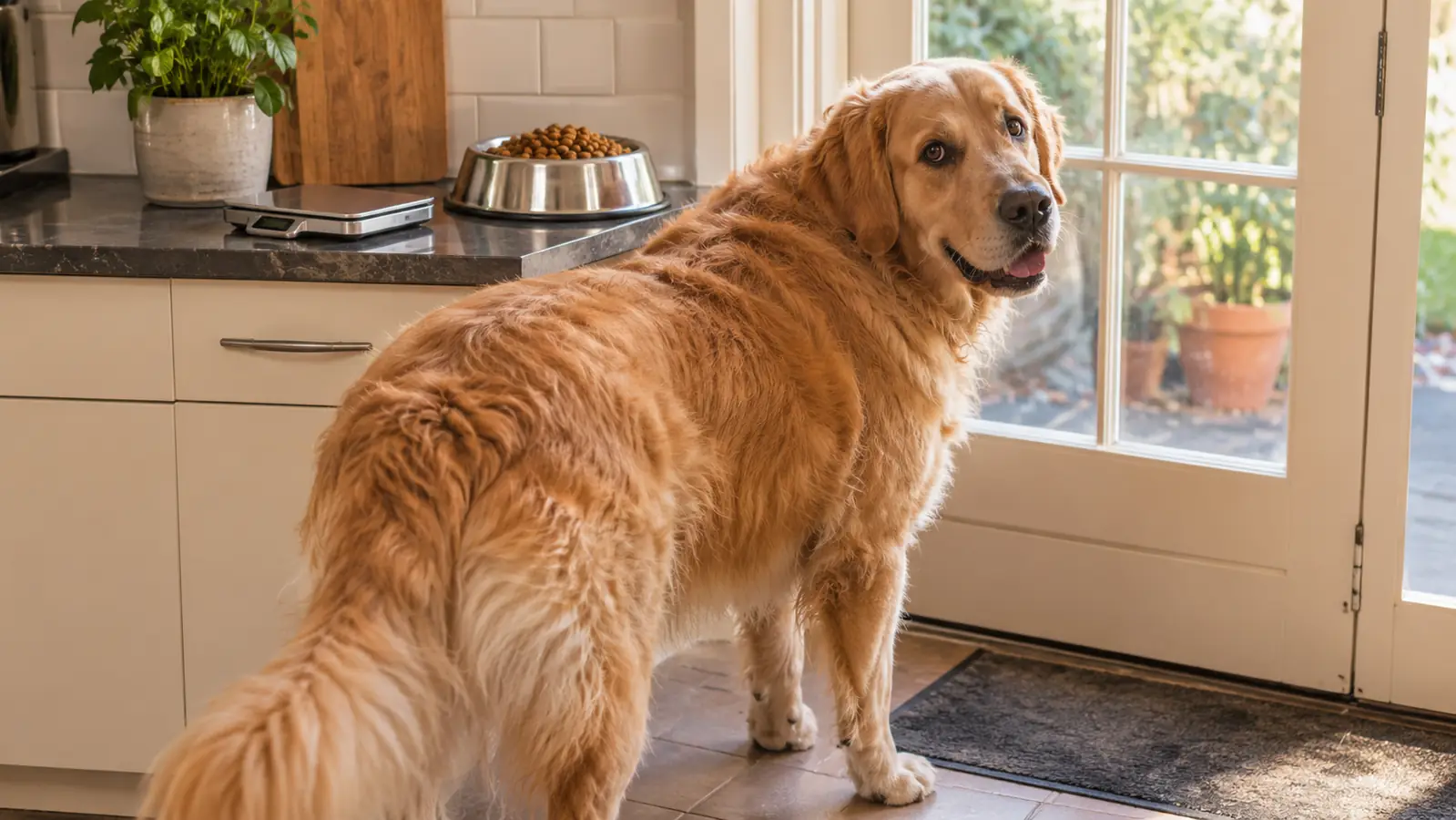
For Mabel's kibble I use the negative reading almost every evening. Her bowl goes on the surface, I press the button, and the display reads zero. Then I scoop kibble back out of the bowl into the bag until the number shows how much I have taken out, and I stop when it matches her ration. If I overshoot I put some back. The whole thing takes about five seconds, and it means her weight stays where the vet wants it, which at seven years old with a retriever and shepherd mix in her is worth a small amount of trouble. I do not trust a scoop. The bag says a cup, the scoop says a cup, and neither of them has ever been exactly right.
The stainless surface matters here too. It is 304 food-grade stainless and it wipes clean with a damp cloth, which sounds trivial until you have tried to get honey off a textured lid at seven in the morning. I wipe it down after anything wet, dry it with the dish towel, and put it back. Months of that and it still looks like it did in the first week.
One Gram at a Time, and Why That Matters More Than It Sounds
The scale reads in 1-gram increments up to 11 pounds, or 5 kilograms. Eleven pounds is more than any bowl of food I have ever assembled, unless you count the whole turkey I weighed at Thanksgiving, which it handled without complaint and without me having to hold my breath.
The 1-gram part is where the real value sits, and it shows up in small doses. Five grams of butter is about a teaspoon. Fifteen grams of peanut butter is a tablespoon, and it is considerably smaller than the tablespoon I was using before. Nobody's eating habits fall apart over one tablespoon of peanut butter. But a tablespoon that is actually three tablespoons, four times a week, for a year, is a different story entirely, and it is a story I was telling myself without knowing it.
I keep a small spiral notebook in the drawer now, not because I am a spreadsheet person but because I wanted to see what a normal week actually looked like. For seven days I wrote down the yogurt, the rice, the oil, and the peanut butter as they came off the Etekcity. It took about four minutes a day, total. That was the entire cost of finding out. The notebook showed me I was eating roughly a third more rice than I assumed and close to twice the oil. A food diary kept from memory would never have caught either one, because my memory was the thing that was wrong.
That is the honest case for weighing food, and it has nothing to do with willpower or discipline. It has to do with the fact that human beings are terrible at estimating volume by eye. I was terrible at it for fifty years and I was confident the whole time. The scale is simply less wrong than I am.
I was terrible at estimating volume for fifty years, and I was confident the whole time. The scale is simply less wrong than I am.
The Annoying Parts
Nothing is perfect and this is not either. I have four complaints and I will give them to you straight.
The scale is small, which is exactly the point, but small means a full dinner plate overhangs the edges. If I am weighing a big bowl of something, I have to set it down carefully and center it, or the reading wobbles. I have learned to use a smaller bowl and weigh in stages, which is more accurate anyway, but it took me about a month to stop being annoyed by it.
The units cycle through a single button: grams, ounces, pounds and ounces, fluid ounces, and milliliters. I use grams and I use pounds and ounces, and I still occasionally overshoot into fluid ounces and have to cycle all the way back around. Five presses instead of one. Not a crisis, just mildly irritating before the coffee has taken effect.
And it runs on two AAA batteries, which come in the box and which eventually die. Mine went several months of daily use before the backlit display started to dim and I noticed I was squinting. Two fresh batteries and it was back to normal. There is no charging cable, no app, no pairing, no firmware, and no account to create. I want to be clear that I consider all of that a feature rather than a limitation, but if you were hoping for a scale that talks to your phone, this is not that scale.
What I Liked
- Tare resets to zero with one press, so you never do subtraction while holding a jar
- Weighs up to 11 pounds in 1-gram steps, which covers everything from spices to a whole turkey
- Backlit LCD with large characters, readable before the kitchen lights are on
- The 304 food-grade stainless surface wipes clean with a damp cloth
- Two AAA batteries included, no charging and no app to set up
- Compact enough to leave on the counter, which is the only reason I use it every day
Where It Falls Short
- A full dinner plate overhangs the small surface, so larger bowls need centering
- One button cycles through five units, and overshooting means pressing four more times
- Batteries are disposable AAA, so you will buy replacements eventually
- Resolution stops at 1 gram, so it is the wrong tool for anything needing finer steps than that
What Changed in the Kitchen After a Few Months
The changes were not the ones I expected. I expected to eat less. Mostly I ate differently.
Pasta was the biggest surprise. A serving on the box is two ounces dry, which is a fairly sad pile, and I had been cooking what I estimated was two ounces and was probably closer to three and a half. So I started weighing it, and I started adding more vegetables to the plate to make up the difference. That was a change I made because the scale made something obvious, not because anybody told me to make it.
There was one Sunday in March I still think about. I had made a pot of chili the way I always made it, and out of curiosity, not virtue, I weighed the shredded cheddar as I put it in a bowl instead of shredding it straight over the pot. It came to almost three ounces. I had assumed an ounce and a half, maybe two. Nobody was hiding anything from me. I had simply never looked. These days I shred it onto a small plate first, weigh it, and carry the plate to the table, and the chili tastes the same. It is a small, dull adjustment, and it is the kind that actually holds up over a year rather than a week.
The other thing that changed is that Dale started using it. He is not a measuring kind of man. But he got tired of me asking whether the chicken breast was big enough, and now he just sets it on the scale, reads out the number, and we get on with the evening. It has quietly ended an argument we were having three times a week.
What did not change: my weight came off slowly, over a couple of years, at a rate that would bore anybody looking for a before-and-after story. That is how it went for me, and your results will be your own. I would be doing you a disservice to suggest otherwise. Talk to your doctor before you change how you eat or how much you move, especially if you are managing a condition or taking medication. That is not a line I am required to write. It is just true.
Who This Is For
This is for the person who has been eating what they honestly believe is a reasonable diet for a year and cannot figure out why the numbers at the doctor's office have not budged. I was that person. I was not lying to myself on purpose. I was just wrong, consistently, in the same direction, about rice and oil and cheese.
It is also for anyone cooking for a pet on a measured ration, or portioning out a recipe that actually depends on weight, or trying to get a consistent cup of coffee in the morning. And it is for the person who wants a tool with no screen to log into and no app that will stop being supported in three years. The Etekcity does one thing. That is the appeal.
Who Should Skip It
Skip it if you want your kitchen tools to connect to your phone and store your history. This scale has a backlit LCD and a tare button and nothing else, and no amount of wanting will change that.
Skip it if you need finer resolution than a gram, which means most serious bread bakers working with yeast or anyone dosing coffee at the tenth-of-a-gram level. Skip it if you regularly weigh large stockpots or big cuts of meat, because 11 pounds is the ceiling and the small surface will not hold a wide vessel comfortably. And skip it if you already know, honestly, that you will not put things on a scale. Buying the tool is not the same as doing the work, and I would rather tell you that than sell you something that ends up in a drawer next to the first one I bought.
Months in, it is still on my counter. That is the whole review.
Eleven pounds of capacity, 1-gram steps, one-button tare, backlit display, stainless surface, batteries included. No app, no account, no charging cable. If that is the tool you have been meaning to buy, this is the one I would buy again.
Amazon See Today's Price on Amazon →