

The scale lives in the hallway of our house, between the bathroom door and the linen closet. It is not a glamorous spot, and neither is stepping onto it at 6:40 in the morning while the dog is doing her impatient dance by the front door. But that hallway is where I finally started paying attention to my own numbers four years ago, after my doctor looked at my blood pressure and used a word I did not care for. I am 61. I am not athletic. I have taken some weight off slowly and kept most of it off, and the tool that has done the quietest, most consistent work in that process is a bathroom scale that talks to my phone.
I have been using the RENPHO smart scale, the Elis 1 model, for months now. Before it, I used a plain dial scale for the better part of thirty years, the kind with a little window and a needle that never quite settled. So this is not a first-week impression typed out the afternoon the box arrived. It is a report from someone who steps on the thing most mornings and has formed some fairly specific opinions about what it does well and where it gets in its own way.
The Quick Verdict
Accurate, cheap to keep running, and the app turns a daily number into a trend I can actually read. The body fat figures wobble with hydration, so treat them as a direction and not a measurement.
Amazon Check Today's Price →The scale that is still in my hallway after months of use
Weight, BMI and body fat on the display, the full history kept in the RENPHO Health app. Today's price and the review count are on the listing.
Amazon Check Today's Price on Amazon →How I've Used It
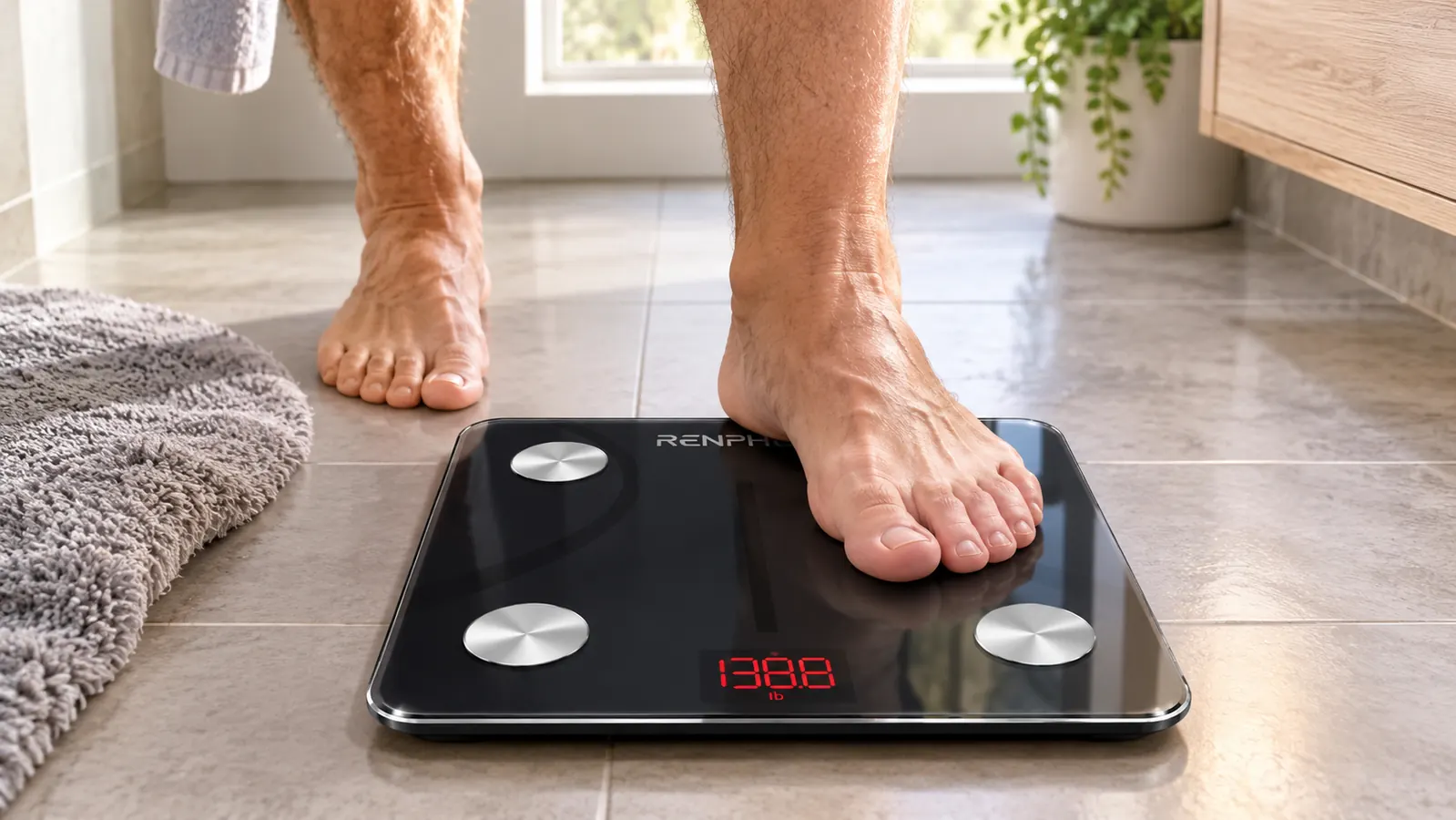
The routine is boring, which is the point. I get up, let Mabel out, and step on the scale barefoot before coffee. The display lights up and gives me weight, BMI and body fat in about the time it takes to draw a breath, and then I open the RENPHO Health app and the rest of the readings land there. The whole thing takes ninety seconds. Then I make oatmeal and stop thinking about it until tomorrow.
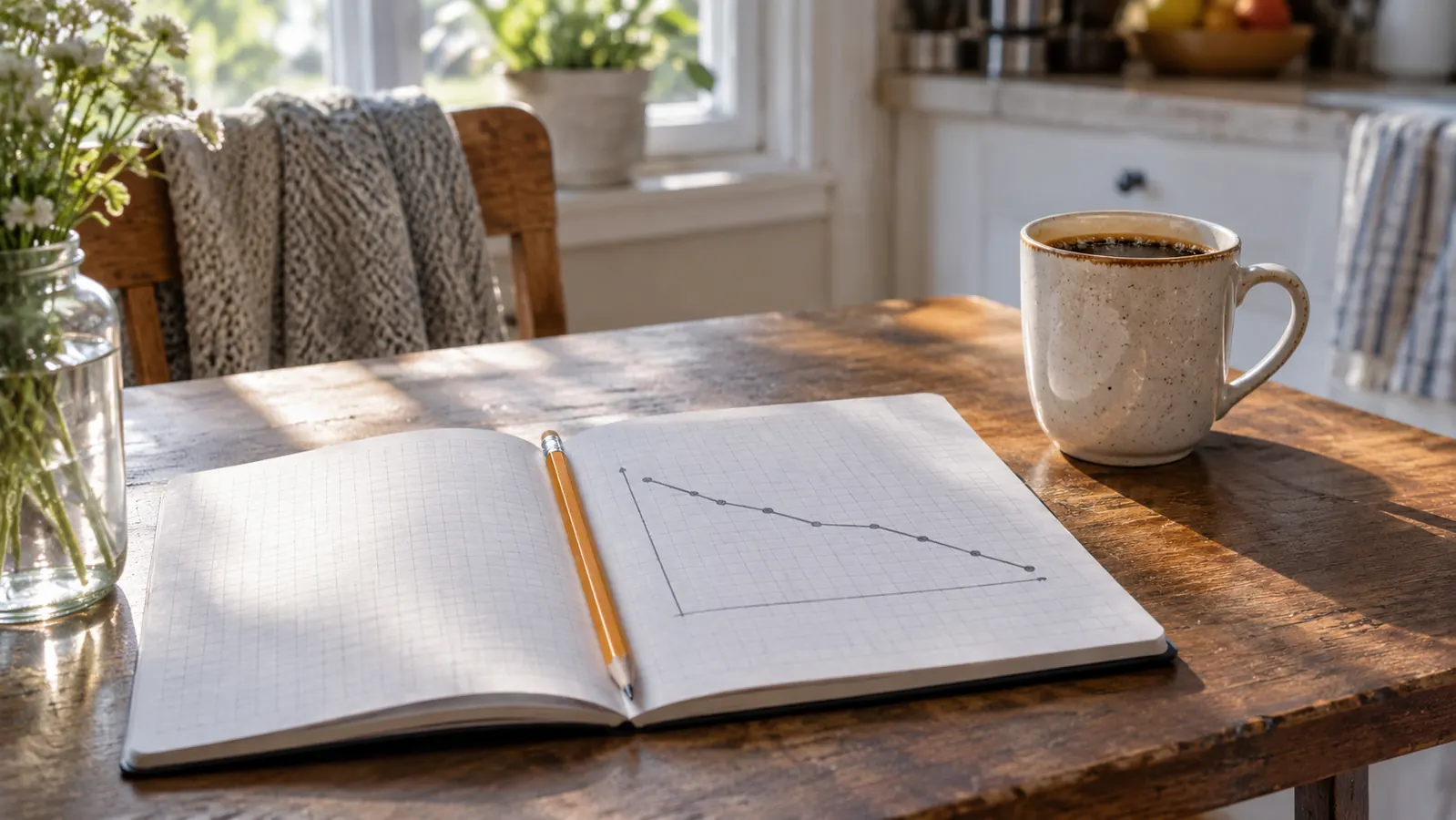
The first two weeks I did not trust it. I kept a pencil and a small spiral notebook on the kitchen counter and wrote the number down every morning the way I had with the dial scale, because I assumed the app was the unreliable part and I wanted a paper record to check it against. After eleven days I set the two columns side by side at the kitchen table. They matched every single morning, and the app had timestamps on all of it, which the notebook did not. I put the notebook in a drawer and have not needed it since.
I have done that morning routine for months, and it has survived the two things that break most routines in this house: a bathroom renovation and a week with the grandkids. During the renovation the scale sat in the bedroom and I weighed maybe three mornings out of seven, and the app simply had gaps in it. It did not scold me. When I went back to daily weighing, the line picked up where it left off, and my history was still sitting there.
I also learned that when I weigh matters as much as anything else. I weigh within about twenty minutes of the same time every morning, after letting the dog out and before I eat or drink anything. The handful of afternoons I have stepped on at four o'clock, after two cups of coffee and a glass of water, the number is different by enough to notice, and that is not the scale being wrong. That is me changing the conditions and expecting the instrument to lie to make me feel better.
The scale is rated to 180 kg, which is far more than anyone here needs, and the readings step in 0.05 kg increments. That sounds like a technicality until you have spent thirty years squinting at a needle sitting between two marks and deciding what you wanted to see. This gives me a number, the app averages it, and the average does not care what I was hoping for.
What the Scale Shows, and What It Only Shows in the App
Three numbers come up on the face of the scale: weight, BMI and body fat. Everything else, and the listing says thirteen metrics in all, lives in the RENPHO Health app. That split took me about a week to appreciate. What I need at 6:40 in the morning is one number and a glance at whether it is up or down from yesterday. What I do not need at 6:40 in the morning is a screen full of data I will misinterpret before breakfast.
The app is where the rest of it sits, and I have made my peace with the fact that most of those numbers are estimates rather than measurements. Body fat is the one people ask me about. Mine moves by two or three points depending on when I step on and how much water I have had, which tells me more about my hydration than about anything else. The scale also reports bone mass. I look at the direction of the trend and I do not build a plan around the decimal places, and I would suggest the same to anyone else standing on one of these in bare feet.
The Trend Line Is the Reason to Own It
A single weighing is close to meaningless. I can gain two pounds of water between Tuesday and Wednesday by having soup for supper. What made this scale useful to me was not the accuracy of any one morning. It was that the app keeps the readings and draws a line through them, and after six or eight weeks that line is a fact instead of a feeling.
The flat stretch came in February. Twenty-six mornings in a row the number sat inside the same two-tenths of a pound, up one day, down the next, going nowhere at all. I had been walking Mabel the same loop through the neighborhood, rain or not, so I assumed the walking was fine and the problem was somewhere else entirely. On a Sunday afternoon I sat at the kitchen table with the graph open on my phone and wrote down everything I had eaten for the previous week from memory, then checked it against the grocery receipt still folded in my purse. The second slice of toast I had been adding at breakfast without counting it showed up in that receipt three times. That is the whole story. The graph found it because the graph does not forget and I do.
I am not a spreadsheet person. I am a retired school librarian who quilts and watches college basketball, and I did not want a project. But the graph is the one piece of data I have actually changed my behavior over.
The good months are quieter and less useful. When the line moves the way I want it to, I do not learn anything. I just keep doing what I was already doing. It is the flat stretches and the ones that go the wrong way that have taught me everything I know about my own kitchen, and I would not have seen either of them in a dial scale I reset with my thumb every morning until it said something I liked.
A single weighing is close to meaningless. What changed my behavior was the line the app drew through six weeks of them.
How It Compares to the Dial Scale I Used for Thirty Years
The dial scale told me one thing, and it told me that thing approximately. I would lean forward, then back, then settle, and the needle would land somewhere in a three-pound range depending on how I stood. It cost almost nothing to run, I never had to think about it, and there were years when that was exactly the right tool for me. I am not going to pretend I regret owning it.
There was a small wheel on the back of the dial scale that zeroed it, and I turned it maybe twice a year, usually after somebody had nudged it getting out of the hall closet. On the RENPHO there is nothing to zero and nothing to turn. I have tested it the only way I know how, which is to step off and step back on three times in a row and see whether the number holds. On the dial I could get three different answers inside two pounds. On this one I get the same number twice, and the third time it holds too, and that is the entire basis for my trusting it. It is not a laboratory test. It is what a retired librarian can do in her slippers in a hallway.
The RENPHO is doing a different job. It runs on two AAA batteries that came in the box, and I have replaced them once in several months of daily use. What I got for the difference is a number I trust down to a tenth of a pound and a record I did not have to keep myself. If you want a scale and only a scale, a plain one is fine and always will be. If you want a record, this is a cheaper way to get one than buying a notebook and then lying in it.
Where It Falls Short
It wants a hard, flat floor. I set it on the bath mat once out of pure laziness, in a hurry, and got a reading that was two pounds light. I stepped off, moved it to the tile, stepped back on and got the truth. That is normal for a floor scale and I knew better, but it is worth saying plainly, because the hallway tile is where mine lives now and I do not move it from there. The one week it sat on the bedroom floor during the renovation, that floor is older and slightly uneven, and the readings that week were noisier than they are on the tile.
The body fat number will make you a little crazy if you let it. On a morning when I am behind on water it reads high. On a morning after a long walk and a full glass it reads low, and neither reading is a verdict on my character. I have also had the Bluetooth connection drop once, on a Tuesday in the fall, which meant the reading sat on the scale and did not reach the app until the next weigh-in. The app filed it under the correct date, so nothing was actually lost, but for a day the graph looked like I had skipped a morning. Neither of those is a dealbreaker for me. Both are the sort of thing you should know before you buy.
The last complaint is not the scale's fault at all. It is that a number this easy to get can become a habit you check the way you check the weather, and some mornings the weather is bad. I have had to make a rule with myself that I look at the graph on Sunday and not at the single number on Tuesday. That rule is doing more for me than any of the thirteen metrics, and I had to learn it the hard way in the first month.
Living With It in a Small House
Our house is two bedrooms and not much else, and the scale leans against the hallway wall between uses. It weighs about 1.25 kg, so it is easy to pick up and tuck away, and the backlit display is bright enough to read with the hallway light off, which matters at 6:40 in the morning when I am trying not to wake Dale. It shuts itself off, so I have never walked out at noon and found it glowing at nobody. In a bigger house I might leave it flat on the floor of a spare bathroom. Here it lives against the wall like an umbrella.
Dale uses it too, in his own way. He steps on, reads the number, says something unflattering about the number, and goes to make coffee. He has never once opened the app. Mabel, who is seven and about seventy pounds, has been weighed exactly twice, both times by me holding her and subtracting myself. It worked, the scale did not complain, and I would not recommend it as a regular practice for your back.
What I Liked
- Weight, BMI and body fat show on the display, so a quick morning check needs no phone at all
- The RENPHO Health app keeps every reading and draws the trend line for you
- Runs on two AAA batteries, which I have replaced once in months of daily use
- Readings step in 0.05 kg, so a real change shows up instead of hiding between two dial marks
- Light enough at about 1.25 kg to lean against the wall in a narrow hallway
- Shuts itself off, so it is never sitting there lit up and draining batteries
Where It Falls Short
- Body fat and the other composition figures swing with hydration and time of day
- Needs a hard, flat floor to be consistent, and a rug will give you a wrong number
- The Bluetooth connection dropped once and the reading had to wait until the next weigh-in
- A daily number this easy to get can become a tyrant if you are prone to that
Who This Is For
This is for someone who has decided to pay attention, which is a quieter decision than deciding to go on a diet. If you are in your fifties or sixties, if your doctor has said something about blood pressure or weight, and if you want a record of what is actually happening rather than a feeling about what is happening, this does that job without asking much of you. It suits the person who wants one number in the morning and the rest of the detail available when they are curious, not the other way around. I would tell anyone starting here to talk to their doctor before changing how they eat or how they exercise, especially with a health condition or a medication in the picture. The scale is a measuring tool, not a plan.
Who Should Skip It
Skip it if a number first thing in the morning can ruin your whole day. I mean that seriously. There were stretches in my forties when weighing myself daily would have made me worse rather than better, and if that is where you are, a scale in the hallway is not the tool you need right now. Skip it too if you want medical grade body composition numbers, because this is a bathroom scale with an app and it is honest about being one. And skip it if you only want to know your weight twice a year, because a plain dial scale handles that for less and never needs a battery or a phone.
If you are ready to keep a record instead of a guess
Weight, BMI and body fat on the display, the trend kept in the app, two AAA batteries in the box. Today's price and the full review count are on the listing.
Amazon Check Today's Price on Amazon →