
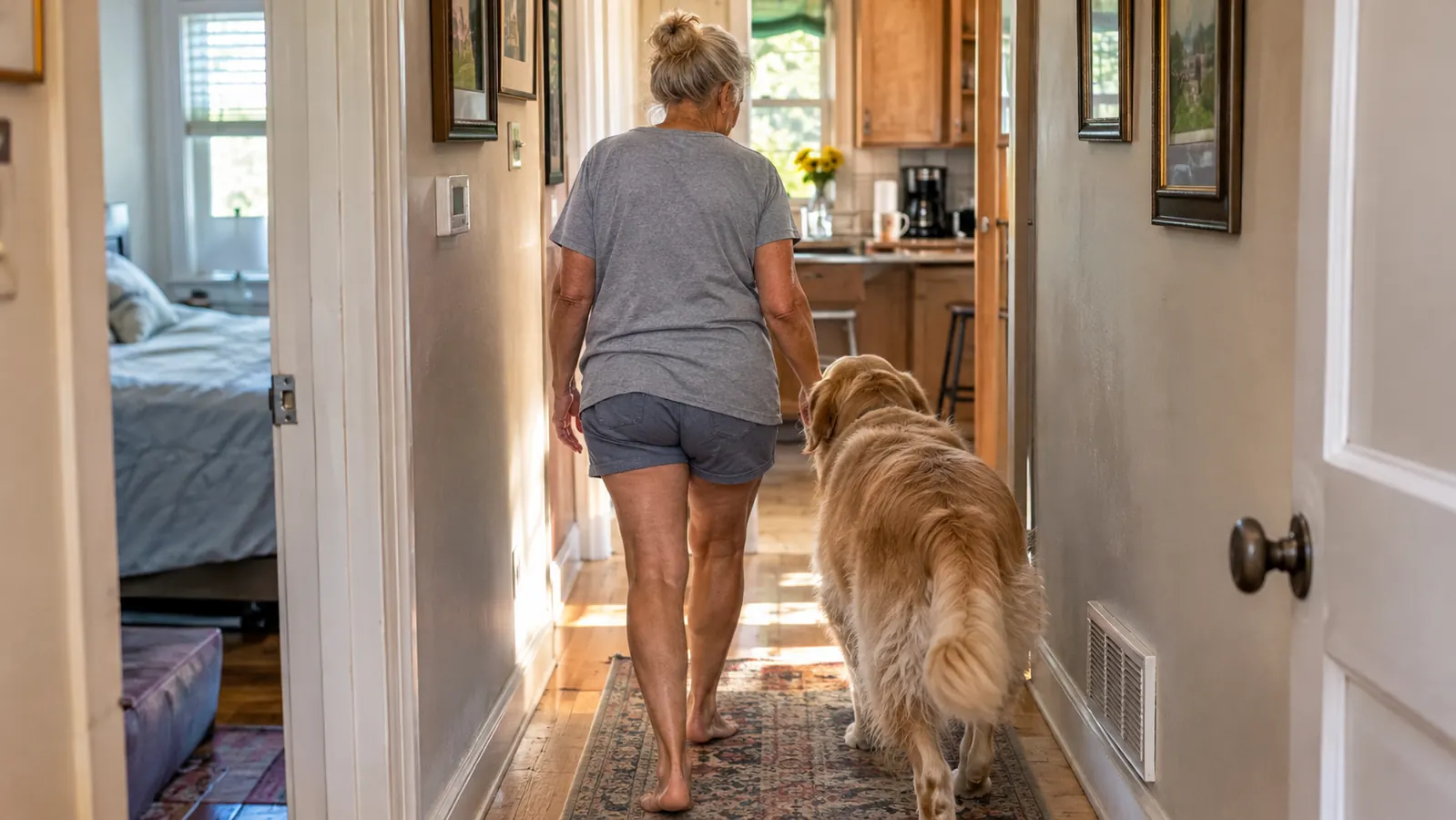
The scale lives in the hallway of our small house in Asheville, about four steps from the bathroom door and two from the closet where we keep the dog treats. It is a RENPHO smart scale, the kind that sends your numbers to a phone app, and I did not plan for it to end up there. I put it in the hallway because that is the one place I walk past a dozen times a day, and I am the kind of person who needs a thing in front of her face before it becomes a habit.
I am 61, a retired school librarian, and I spent most of my fifties avoiding the scale at the doctor's office. What got my attention was not a number on a display. It was my doctor, a cuff on my arm, and a question I could not answer: what are you tracking at home? I had a bathroom scale under the sink that I stepped on maybe once a month, usually after a vacation, usually with my eyes half closed. One number, no memory of it by the next week, which made it very easy to tell myself nothing had changed.
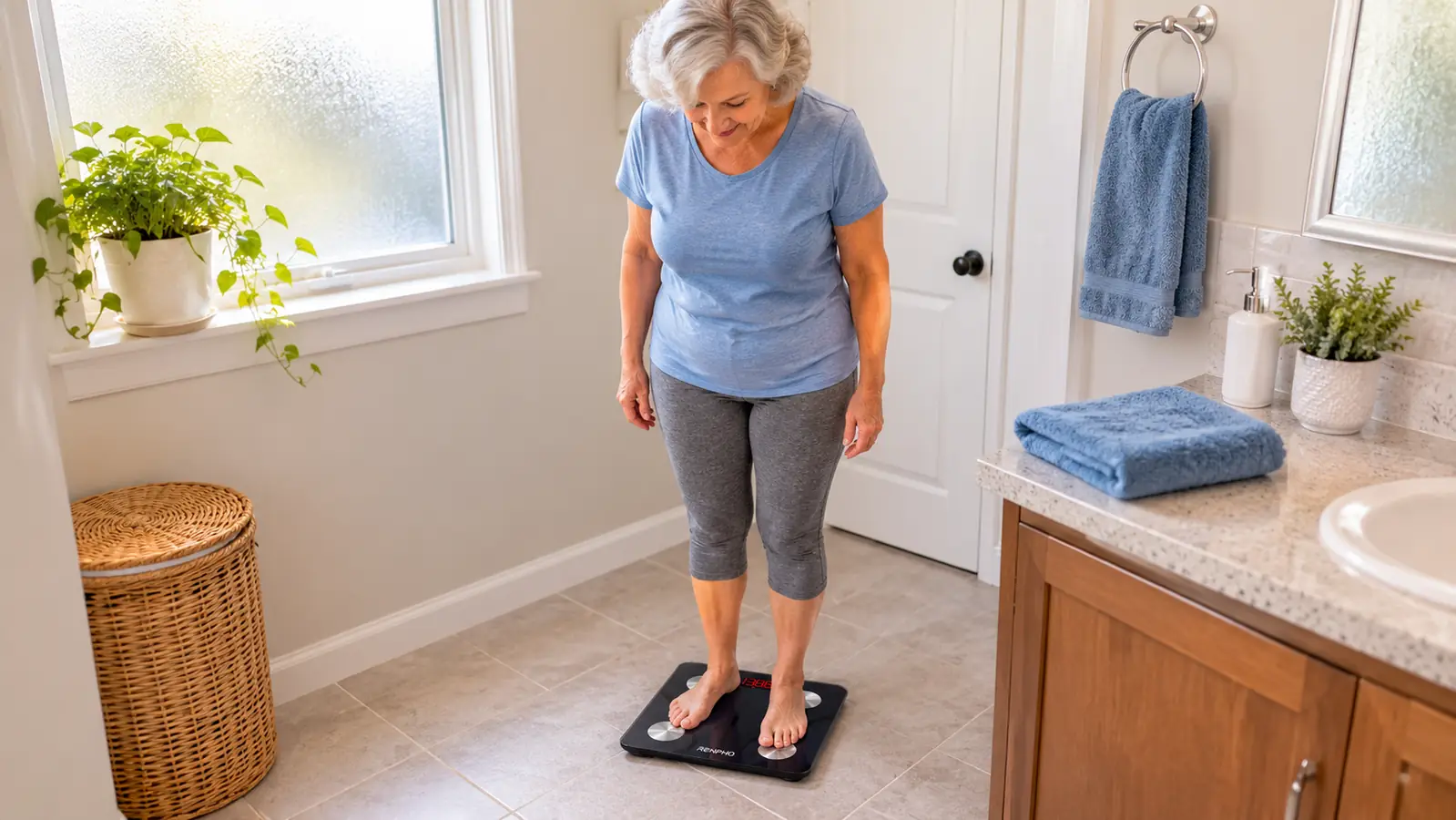
Dale found the RENPHO before I did. He is not a gadget person, so this surprised me. He saw one at our daughter's house over Thanksgiving, came home, and ordered it. I rolled my eyes. Then I stepped on it in January, and it synced to the RENPHO Health app on my phone over Bluetooth before I found my slippers. The display showed my weight, my BMI, and my body fat. The app held the rest, thirteen metrics in all, and I will be honest that I still do not know what some of them mean.
What I actually used, every morning, was the trend. The app keeps a line of every weigh-in, and that line is the first honest picture of my own habits I have ever had. A bad morning shows up as a small bump. A bad month shows up as a slope. I could argue with a single number. I could not argue with six weeks of them.
I want to be plain about what this scale is not. It is not a coach, it does not tell me what to eat, and it has never once made me walk the dog. What it does is keep a record I cannot misremember. For a woman who spent years rounding her own history in her favor, that turned out to be the missing piece.
I could argue with a single number. I could not argue with six weeks of them.
The trend line is the part that made me keep stepping on it
The RENPHO Elis 1 sends weight, BMI and body fat to the RENPHO Health app over Bluetooth, so the pattern is saved whether or not I remember to write it down.
Amazon Check Today's Price on Amazon →Here is what the hallway scale changed, practically. I weigh myself at the same time every morning, after Mabel's walk and before coffee. Mabel is our dog, seven years old, about seventy pounds of retriever and shepherd, and she needs a long walk every day whether I feel like it or not. That walk is now the anchor of my morning, and the scale is the ten seconds after it. Two habits stacked on top of each other, which is the only way I have ever gotten anything to stick.

The scale reads in small increments, 0.05 kg, which sounds fussy until you understand why it matters. My changes are slow. A coarser scale would round them away, and I would see the same number for weeks and quit. This one catches the small drift, up or down, and the app draws it so I can see it. It also handles the whole household. The capacity is 180 kg, so Dale uses it too, and it came with two AAA batteries that I have not thought about since. It shuts itself off, which matters for a person who leaves the iron on.
The metrics beyond weight are the part I am most careful about. Body fat and BMI come from the scale and the app, and they are estimates, not lab work. My doctor was clear about that when I showed her the app at a checkup. She was more interested in the weight trend and my blood pressure than in any single body fat reading, and she was the one who told me to keep walking Mabel and keep the kitchen changes boring. I am not going to pretend the other numbers are a diagnosis. They are context.
What I did not expect was how much the record would settle my own head. I used to weigh myself and then spend the morning deciding what kind of day it was going to be. Now I look at the line, see that it is going the right way over a month, and get on with my breakfast. The scale is a tool I use for about ten seconds. The arguing with it is over.
What I'd Tell You If We Were Sitting at My Kitchen Table
First, talk to your doctor before you change your diet or your exercise, especially if you have a health condition or you take medication. I did, and it is the reason I did not go chasing some extreme plan in February and quit by March. Second, if you are going to buy a scale like this one, buy it for the trend, not for the morning number. Weigh yourself at the same time, under the same conditions, and give it a month before you decide anything. Results vary. Mine have been slow, and slow has been the point.
Third, do not let the extra metrics turn into a hobby. Thirteen numbers on a screen can make you feel like you are doing something when you are only looking. The things that moved my own trend were unglamorous: the long walk with Mabel, smaller plates in the kitchen, and fewer nights on the couch with the basketball game and a bag of something. The scale recorded that. It did not cause it. If you are the kind of person who needs to see the line to believe it, this one is worth the space in your hallway.
If you are going to track one thing, track the direction
The Elis 1 keeps the record for you over Bluetooth, so a slow month still shows up as progress instead of a number you forget by Thursday.
Amazon Check Today's Price on Amazon →