
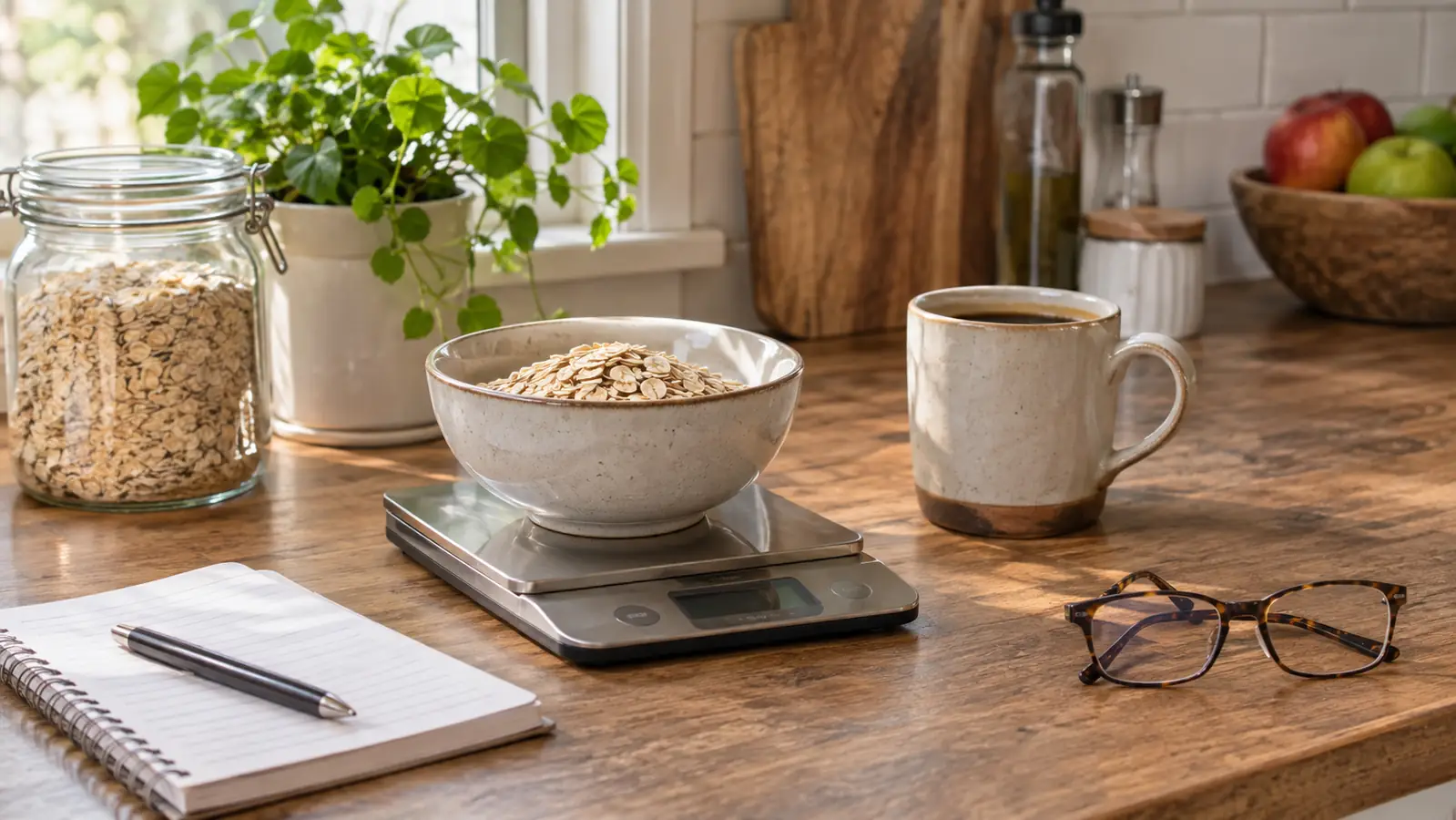
I keep an Etekcity food scale on my kitchen counter the way some people keep a spoon rest. It is not a statement. It is just there, next to the coffee can, and I use it more days than not. I am 61, retired from school libraries, and I live in Asheville with my husband, Dale. I started paying attention to portions in my late fifties after my doctor flagged my blood pressure. I am not going to tell you a scale will fix anything on its own. It will not. But it does make the daily decisions less foggy, and that is the part I needed.
Before the scale, I measured with coffee cups and guesses. A cup of cereal could mean three different amounts depending on the day. A spoon of peanut butter was whatever the spoon felt like. The scale gave me a repeatable number, and a repeatable number is easier to work with than a good intention. Here are ten reasons it has stayed on my counter.
The smallest tool in my kitchen does the most work
If you want one plain, reliable way to see what a portion actually is, start with the Etekcity food scale. It weighs up to 11 pounds in 1 gram increments, has a tare button, and runs on the two AAA batteries that come in the box.
Amazon See the Etekcity Food Scale on Amazon →It turns a bowl of cereal into a number you can work with
My breakfast used to be a bowl, a splash of milk, and a guess. Now I set the bowl on the scale, press tare, add the cereal, and write down the grams. I do the same with the milk. I am not doing this to be precise for its own sake. I am doing it because I can eat the same breakfast on Tuesday and Saturday and know it is the same breakfast. When something changes, I can see what changed. That is hard to do with a coffee cup.
The tare button lets you build a plate without doing math
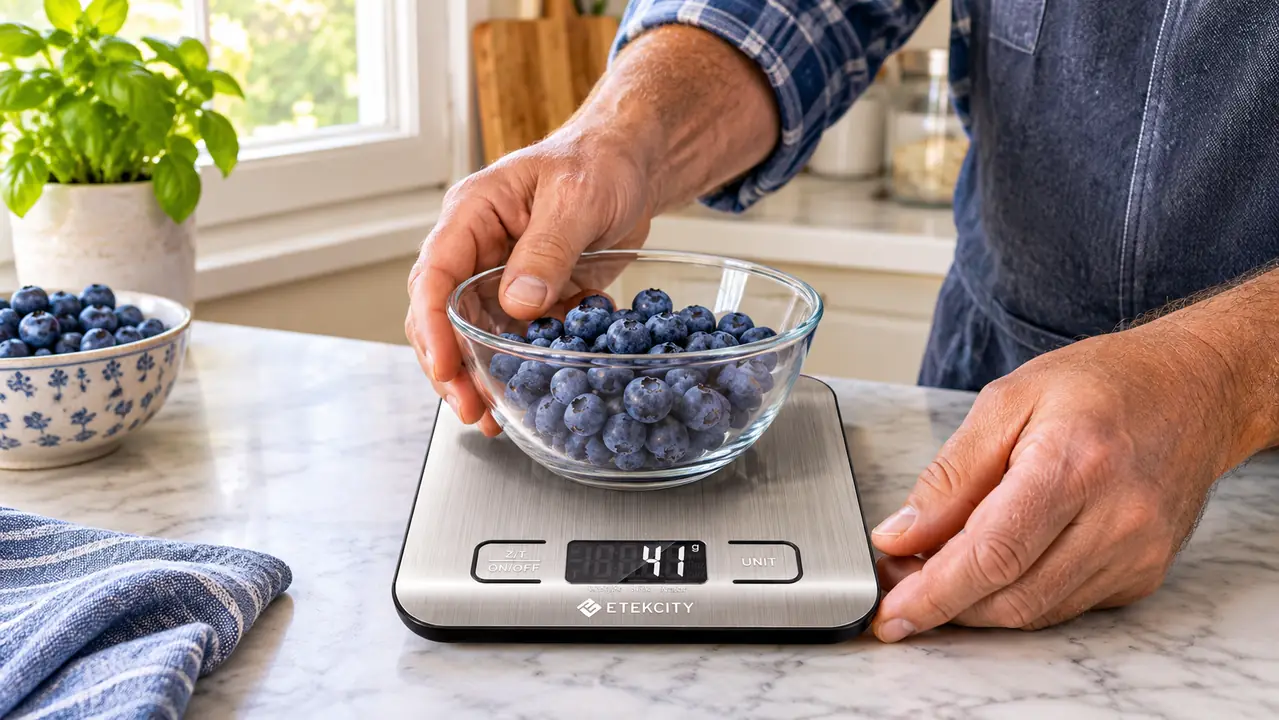
The tare button is the one I use most. Put the plate on the scale, press tare, add chicken, press tare, add rice, press tare, add vegetables. Each time the display goes back to zero, so I do not have to subtract anything in my head. I am 61 and I can do arithmetic, but I do not want to do it while dinner is getting cold. Tare makes the scale feel like a helper instead of a homework assignment.
One gram increments catch the small additions that add up
A handful of almonds, a second pat of butter, an extra pour of dressing. None of those feel like much in the moment. The scale shows them as real numbers. The Etekcity reads in 1 gram increments, so I can see that the small handful was 28 grams and the second one was another 22. I do not track every almond forever. I track long enough to learn what my handful actually weighs, and then I can make a choice with my eyes open.
Five units mean you can follow any recipe without converting
Some recipes give grams. Some give ounces. Some give fluid ounces or milliliters. The scale switches between oz, lb: oz, fl oz, g, and mL, so I do not have to stop and convert anything on my phone. I can put the bowl on the scale, set it to grams for the oats, and switch to milliliters for the milk. It sounds small. It is small. It is also the difference between using the scale and finding a reason not to.
The 11 pound capacity handles a whole chicken or a big mixing bowl
I did not want a scale that only worked for a single serving. The Etekcity weighs up to 11 pounds, so it can handle a whole chicken, a stockpot of soup, or a mixing bowl big enough for cornbread. I use it when I divide a pound of ground turkey into four portions for the freezer. I use it when I make chili and want to know how much goes in each bowl. One scale, not two.
The backlit LCD is easy to read without hunting for glasses
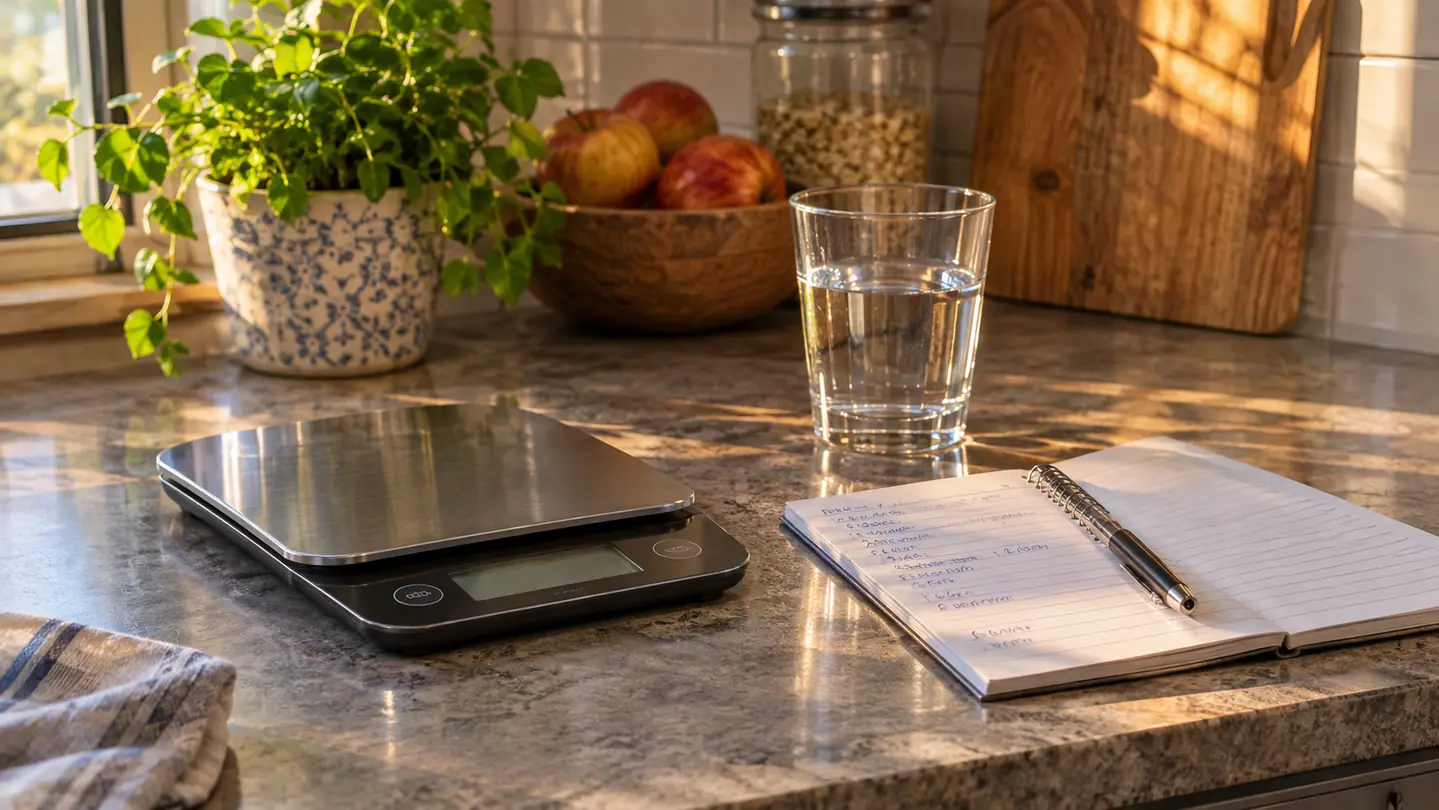
The display is backlit and the numbers are large. I can read it from the counter without leaning in, and I can read it in the late afternoon when the kitchen light is not great. I keep my reading glasses in the living room, so this matters more than I expected. A scale you have to squint at is a scale you stop using. This one is easy to read at a glance, which is the whole point of leaving it out.
It is small enough to leave on the counter
The scale is compact, so it lives on the counter between the coffee can and the bread box. If I had to get it out of a cabinet every time, I would use it twice a week. Because it stays out, I use it twice a day. That is not a personality trait. It is a design choice. The scale is small enough to leave out and light enough to move when I need the counter space. Convenience is underrated when you are trying to build a habit.
The stainless steel surface wipes clean in seconds
I have spilled yogurt, oil, and flour on this scale. The surface is 304 food-grade stainless steel, and I wipe it down with a damp cloth. I do not put it in the sink. I do not scrub it. That matters because a scale that is annoying to clean becomes a scale I avoid. This one takes less time to clean than it takes to find the lid for the yogurt.
It keeps Mabel's dinner consistent, not just mine
Mabel is our seven-year-old retriever-shepherd mix, about 70 pounds, and she gets a measured scoop twice a day. I used to eyeball it. Now I put her bowl on the scale, press tare, and weigh the kibble. The scale is rated for pet food among other uses, and it is more accurate than my scoop. I am not saying a dog scale is why she is healthy. I am saying it is one less guess in a house where I already have enough to remember.
It pairs with a daily walk instead of a crash plan
I walk Mabel every day, usually a long loop through the neighborhood. The scale and the walk do different jobs. The scale shows me what I am eating. The walk gets me out of the house and moving. I do not expect either one to work overnight. I started this in my late fifties because my doctor flagged my blood pressure. I am still at it because the routine is boring enough to keep. Talk to your doctor before you change your diet or exercise, especially if you have a health condition or take medication.
What I'd Skip
I would skip the scale that tries to do everything. I do not need an app, a phone, or a dozen saved profiles to weigh a bowl of oatmeal. I also would not buy a second scale for the dog. One compact scale on the counter does both jobs. What I would skip is the idea that you need a perfect system before you start. A plain scale, a notebook, and a willingness to look at the number are enough. If you already have measuring cups, you can still use them. I did for years. The scale just answers the question faster.
The scale did not make me disciplined. It made the number visible, and a visible number is easier to work with than a guess.
If the counter is where the guesswork lives, start there
I am not going to promise you a number on the scale or a timeline. I can tell you that a small, readable, easy-to-clean food scale has made my own portions less mysterious. The Etekcity weighs up to 11 pounds in 1 gram increments, includes two AAA batteries, and has a tare button I use every single day.
Amazon See the Etekcity Food Scale on Amazon →