

I used to think I had a good eye for a portion. Forty years of cooking for two will do that. Then my doctor looked at my blood pressure numbers and asked how much I was actually eating. I said I did not know. That was the honest answer, and it bothered me more than the numbers did.
So I started writing things down on the back of an envelope. A handful of almonds. A scoop of rice. Two tablespoons of dressing, or what I had been calling two tablespoons. When I finally weighed those same servings, the envelope turned into a comedy of errors. My handful of almonds was closer to two handfuls. My scoop of rice was nearly double what the bag called a serving.
None of this was dramatic. I was not fooling myself on purpose. Eyeballing food is a skill people assume they have, the way they assume they can guess the temperature of a room. Once I started weighing, I was off by a third or half on things I had never measured.
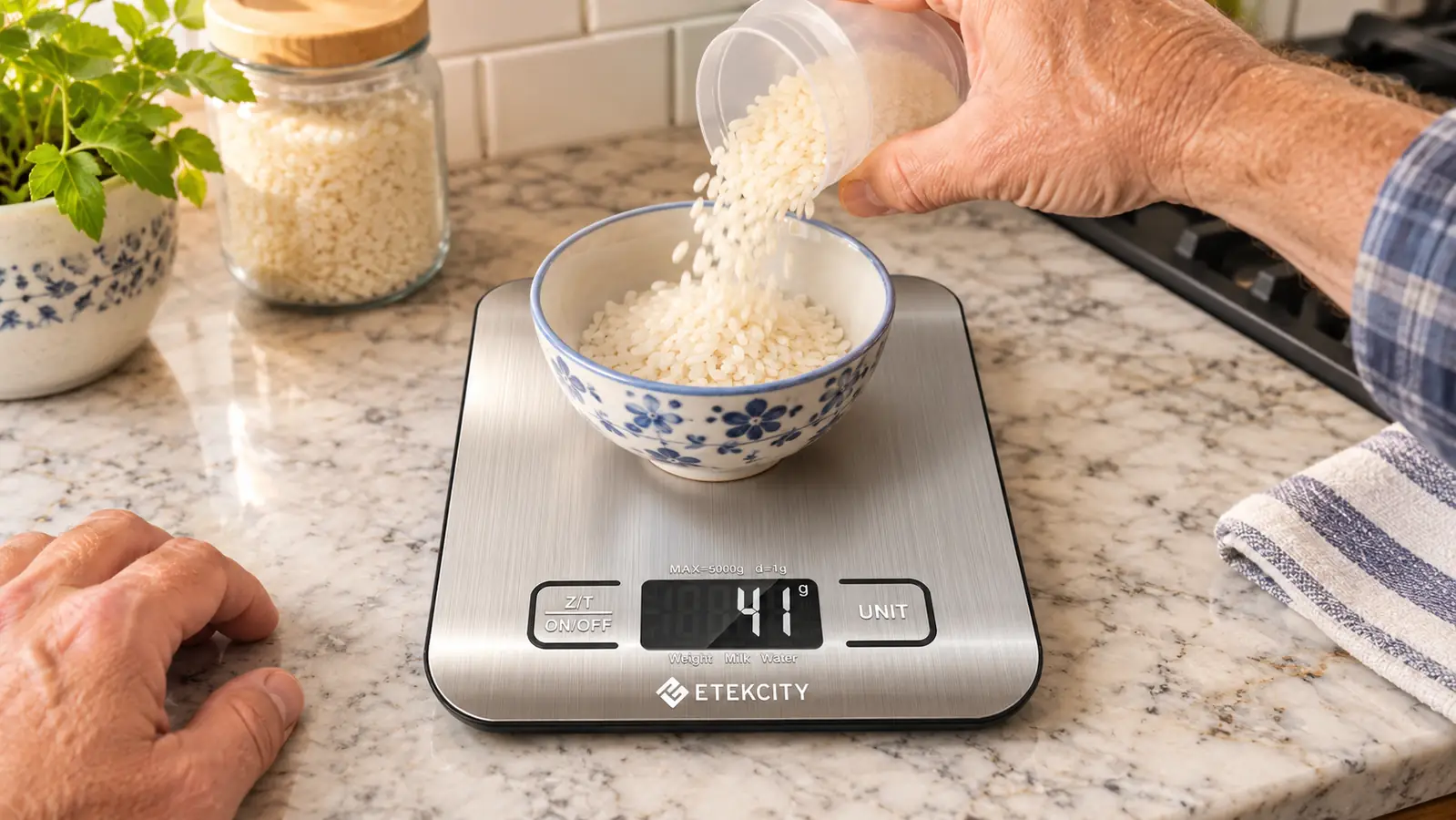
The scale I settled on is an Etekcity food scale, the small digital one that weighs up to 11 pounds. It does five units, grams and ounces among them, and it reads in 1 gram steps. What sold me was how little there was to learn: a backlit LCD screen with large fonts I can read without hunting for my glasses, one tare button, and nothing else to configure. It runs on two AAA batteries that come already installed, so I weighed something the same afternoon it arrived.
My handful of almonds was closer to two handfuls, and my scoop of rice was nearly double the serving on the bag.
The Envelope Was Lying to Me. The Scale Was Not.
A small digital scale with a backlit LCD screen, one tare button, 1 gram readouts and an 11 pound capacity. Mine lives in the silverware drawer and gets used every single day.
Amazon See Today's Price on Amazon →The first week I weighed everything and hated it. By the second week I had a short list of things worth weighing and a longer list of things that were fine left alone. Rice, pasta, nuts, cheese, salad dressing, cereal, and Mabel's kibble. Vegetables and fruit mostly went back to being vegetables and fruit. The tare button does most of the work: bowl on the scale, press tare, add rice, press tare again, add the chicken. One bowl, one dish to wash.
Mabel is a retriever shepherd mix, seven years old and about seventy pounds, and she gets a long walk every morning. Her food was the other place I had been generous without noticing. The bag gives a range based on weight, and I had been scooping somewhere near the top of it. Now her kibble goes into the same bowl on the same scale and I know what a serving actually looks like. The dog has not complained.
Dale rolled his eyes for about ten days. He called it a chemistry set and said he could tell a tablespoon of peanut butter by sight. Then he started weighing his coffee beans, because he is the kind of man who will weigh coffee but not lunch. I let him have it. The scale lives in a drawer next to the silverware, which is the only reason it gets used. The stainless steel top wipes clean with a damp cloth, and I have not had to think about it beyond that.
Portioning meat was the other quiet win. The package says four servings, and I had been treating it as three because that is how it divided on the cutting board. Weighing it settled the argument with the package. I portion it out on Sunday, put it in the fridge, and dinner is decided before I am hungry and tired at six o'clock. That is most of the battle for me, honestly. Decisions made in advance are kinder than decisions made standing in front of an open refrigerator.
Here is what the Etekcity scale does not do. It does not know what you are eating. It has no food database, no app, no plan, and no opinion. It will happily weigh a bowl of chips. I say that as someone who has weighed a bowl of chips. The value is only in the number it gives you and what you decide to do with it. The 11 pound capacity handles a mixing bowl and a bag of flour without complaint, and the fl oz setting exists for people who measure liquids, which is not me.
The Part That Surprised Me
I expected the scale to make me feel restricted. It did the opposite. Once I knew what a serving of rice looked like in my own bowl, I stopped guessing low all day and then feeling confused at dinner. I also stopped rewarding myself with food I had not counted, because there was nothing left to be vague about. It is hard to argue with a number you wrote down yourself.
I want to be careful here, because this is one small tool and not a program. I lost weight slowly over about two years, walking Mabel every morning and changing what was in my kitchen. Results vary, and they varied for me month to month. Nothing about a food scale works overnight, and if you take medication or manage a health condition, talk to your doctor before you change how you eat or exercise. Mine is the one who started this whole thing, and she has been a better guide than any app.
What I'd Tell You If We Were Sitting at My Kitchen Table
If you were sitting across from me with coffee, I would tell you to weigh three things for one week. Not everything. Three: your starch, your fat, and whatever you put on your salad. Write the numbers on the envelope. You will be surprised once, and then you will be done being surprised. I would tell you to keep the scale where you actually reach for it, because a scale in a cupboard is a scale you stop using. I am not loyal to brands, but the Etekcity scale has not given me a reason to look for another one. And I would tell you to expect it to feel tedious for about ten days, then ordinary. That was my whole experience of it. Not a transformation. Just fewer guesses.
Weigh Three Things for a Week and Find Out What Your Handful Actually Is
Start with the starch, the fat, and the dressing. The scale handles the arithmetic. Results vary, so talk to your doctor before changing diet or exercise.
Amazon Check the Etekcity Food Scale on Amazon →