
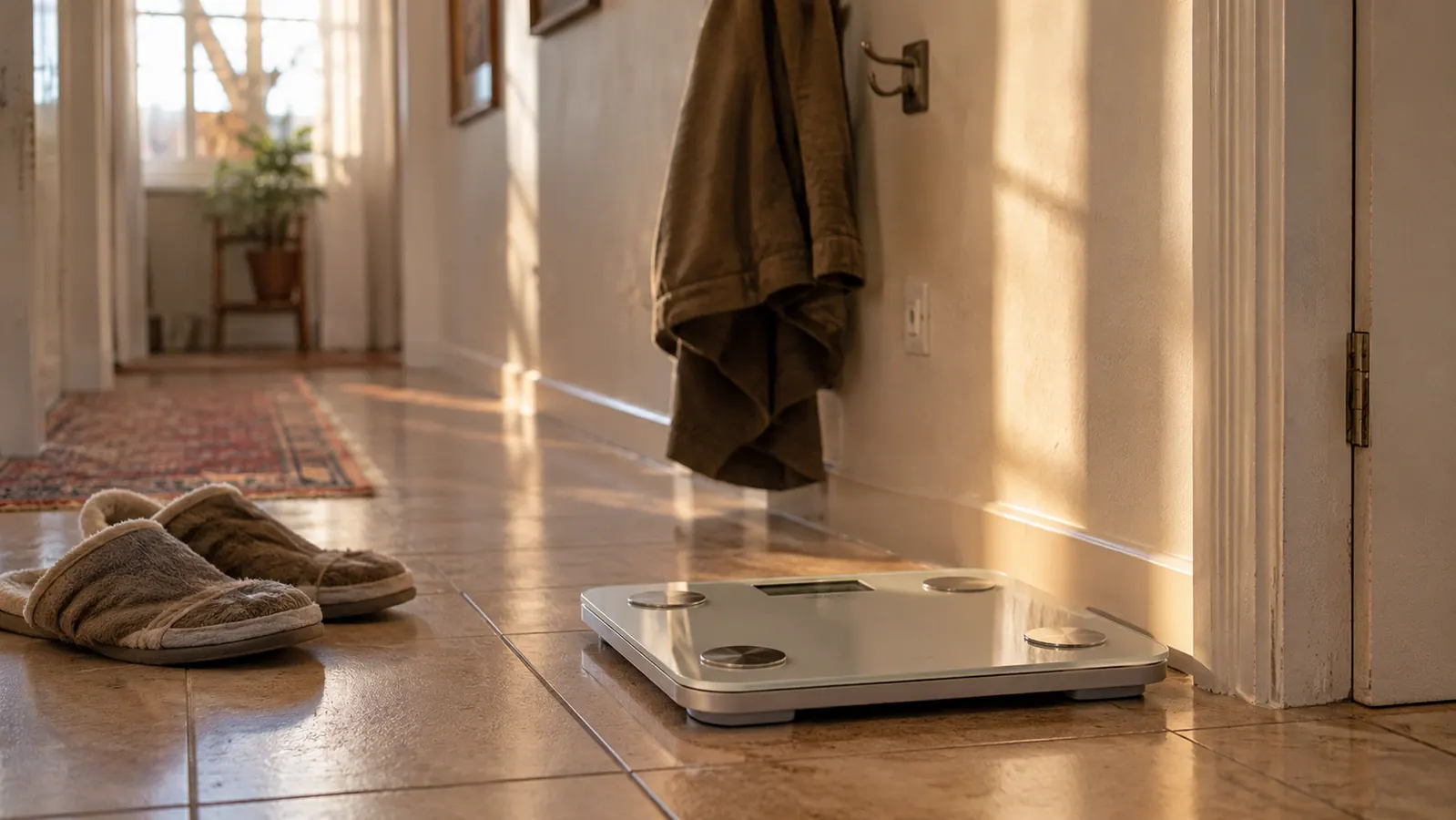
I did not want a smart scale. Most reviews of this one read like the writer had been waiting their whole life for a bathroom scale with Bluetooth, and I am not that person. My old scale had a needle that drifted a pound or two depending on which floor tile it sat on, and I had started walking Mabel every morning after my doctor flagged my blood pressure. What I wanted was a number I could trust from one week to the next. The RENPHO Smart Scale ended up in my hallway because it cost less than most of what I compared it to, because a very large number of people had already reviewed it, and because it keeps a history instead of a single number. None of those are reasons to trust a product. They are reasons to try one and pay attention.
So here is the honest version, about three months in. It is a good scale with a decent app and one feature I mostly ignore. It is not a body composition lab, it will not tell you anything your doctor cannot tell you better, and the number it shows you in the morning is only useful if you stop treating it like a verdict. If you want the short answer: I would buy it again, I would tell a friend to buy it, and I would tell that same friend to ignore about half of what the app puts on the screen. The rest of this is why.
The Quick Verdict
A dependable daily scale with an app that does the real work. The body metrics beyond weight are directional at best, so weigh for the trend and let the rest go.
Amazon Check Today's Price →The scale is not the point. The four week line is.
It shows weight, BMI and body fat right on the display, then sends the reading over Bluetooth to the RENPHO Health app so the history builds itself. Check today's price and see the full spec.
Amazon Check Today's Price on Amazon →How I've Actually Used It
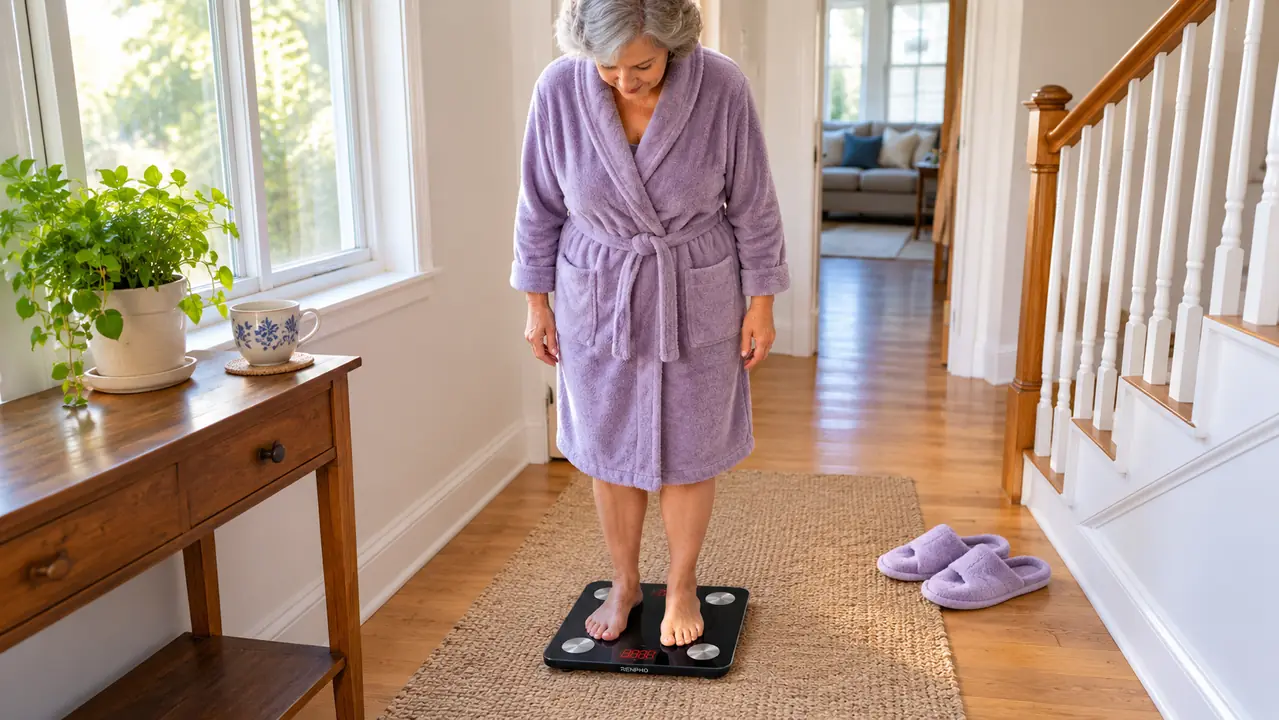
The scale sits on the same patch of hallway tile every morning, about four steps from the bathroom door. I step on before coffee, bare feet, same spot, and the backlit display lights up with three things: weight, BMI and body fat. That is it. No phone needed for those three, which matters more than I expected, because there are mornings when I do not want to open an app and be congratulated. The display is legible in a dark hallway at six in the morning, and the scale shuts itself off after a few seconds, so there is no button to press and nothing left running. The two AAA batteries it ships with are still in it. When I do have my phone nearby, the reading goes over Bluetooth into the RENPHO Health app and joins the history.
It reads in 0.05 kilogram steps, which is fine enough that I stopped arguing with it. I tested it the way I test anything I do not trust: three weigh-ins in a row, stepping off and back on between each. Two came back identical and the third was a step off, which is the same thing that happens on the scale at my doctor's office. It handles up to 180 kilograms, so Dale can use it without thinking twice, and the scale itself weighs about as much as a hardback book, which means I move it to sweep and put it back without ceremony. Accuracy claims made on a bathroom floor are always a little hopeful. This one has been consistent, and consistent is what I actually needed.
The first month I weighed every single morning and wrote it on the calendar in the kitchen. That was too much. The second month I cut it to three mornings a week, Sunday, Wednesday and Friday, and the numbers got more useful immediately, because I was no longer reacting to noise. The third month I mostly let the app hold it and looked once a week, usually with a cup of coffee and no particular feelings. Nothing about the scale changed. What changed was how much attention I gave a single reading, and that was the whole lesson.
What Nobody Tells You About the Body Fat Number
Here is the part the product page does not sit you down and explain. The body fat figure is an estimate worked out from the reading under your bare feet, the way every foot-based scale in this range does it, and it moves for reasons that have nothing to do with fat. Hydration is the big one. A salty dinner, a long walk in the Asheville heat, a glass of water before you step on, all of it shifts the estimate. One morning I weighed, then walked Mabel, then drank a glass of water, then weighed again out of plain curiosity. My weight had moved less than a pound. The body fat estimate had moved two full points. Two points, in forty minutes, with no change to my body at all.
That is not a defect in the RENPHO scale specifically. It is how this kind of measurement behaves, and any scale that estimates body fat from your feet will do the same thing to you. The mistake is treating one morning's reading as information. The useful version is the shape of the line over a month. If the line drifts down slowly while your weight drifts down slowly, you are probably heading the right direction. If it bounces inside a two point band for three weeks, that band is the noise floor, and you should stop reading tea leaves in it.
My weight moved less than a pound in forty minutes. The body fat estimate moved two full points. That told me exactly how much weight to give it.
The same caution applies to BMI, which the scale shows you directly. BMI is a formula using your height and your weight and nothing else. It does not know that you have been walking four miles a day, or that you are sixty-one, or that you carry your weight the way your mother did. It is a crude screening number that doctors use because it is fast. It is fine as a rough marker and it is not a report card. My husband Dale, who is not the one trying to lose anything, gets a worse BMI than I do and has for years. That is a useful thing to remember when the display makes you feel judged at six in the morning.
The App Is Where the RENPHO Scale Earns Its Keep
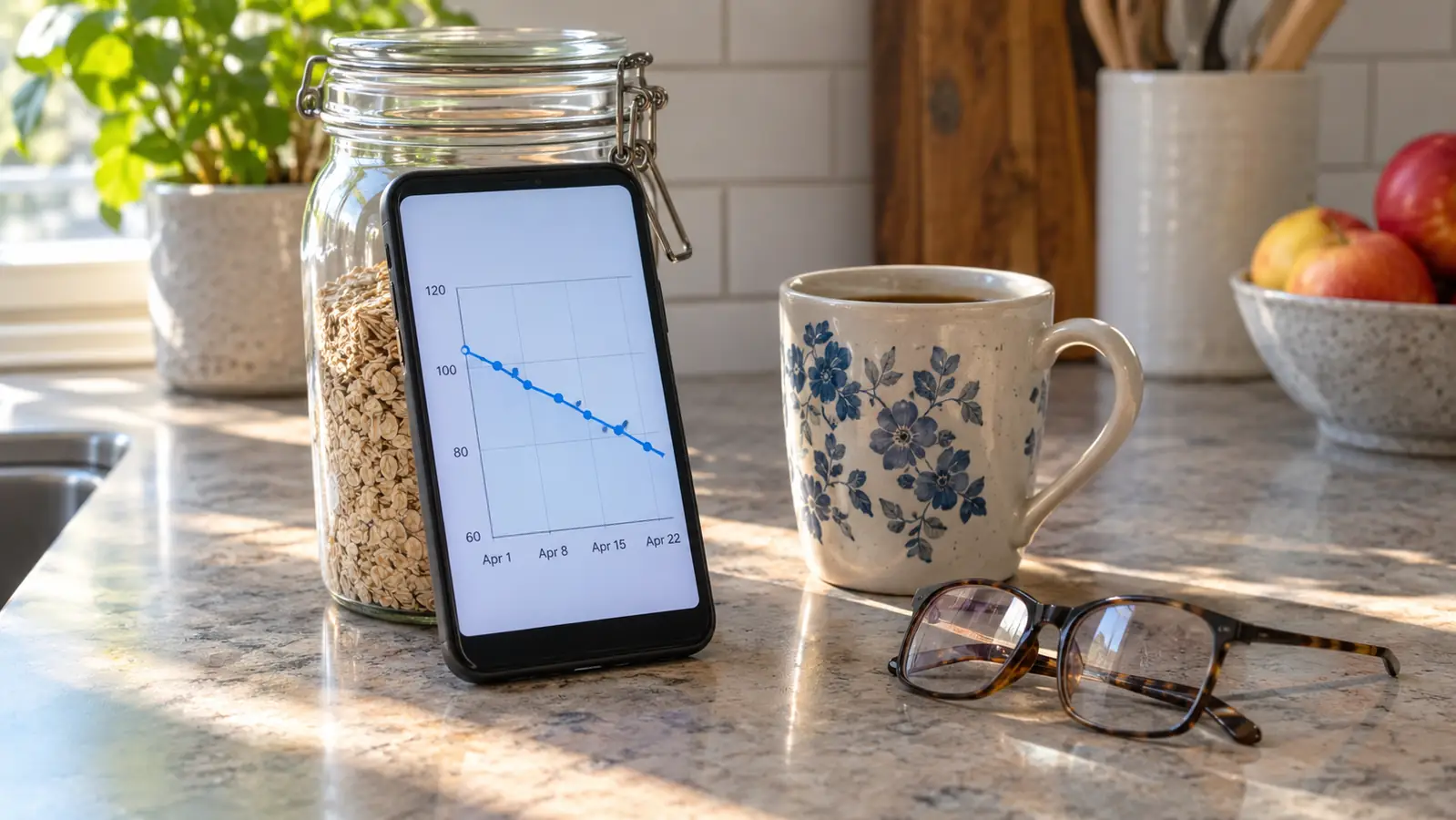
The scale is the hardware. The RENPHO Health app is the part I would miss if it were gone. Pairing took about two minutes over Bluetooth and I have not had to do it again. Every weigh-in lands in the app with a date attached, and the app draws those readings as a line, and that line is the only thing that has ever actually told me anything true. A single morning's number is a rumor. Four weeks of numbers is a trend. When I hit a stretch where nothing seemed to be happening, the app showed me that I had been flat for three weeks and then dropped over the next two. I would never have seen that from the calendar on the kitchen wall.
The app is also where the other metrics live. The scale advertises 13 of them and I look at about four. Weight, body fat, and the trend line are the ones that inform a decision in this house. Bone mass is on the list and it has barely moved in three months, which is either reassuring or uninteresting depending on your mood. I am not qualified to interpret most of the rest, and I would rather say that plainly than pretend I have a system. If you like data and you have a doctor willing to look at it with you, the extra numbers are there. If you are going to stare at thirteen dials every morning and feel bad about yourself, close the app after the graph.
One practical note. The app wants a profile set up before it will show you anything, which took a few minutes and mildly annoyed me. I understand why it asks. I still grumbled. Once it was done, though, it stayed done, and the sync has been reliable in a house with a mediocre internet connection and a dog who believes the hallway belongs to her. I also like that the three basic numbers show on the scale whether or not the phone is anywhere near it. That means a missed sync is an inconvenience, not a lost reading.
What Three Months Actually Looked Like
I am not going to quote you a number of pounds. Partly because I do not think one person's number is useful to another, and partly because the honest story is duller than a number. What the scale and the app showed me over three months was a line that went down slowly, flattened twice, and went down again. The two flat stretches both lined up with weeks when I was not walking Mabel as far, once because of rain and once because of a cold that kept me on the couch. I would not have connected those things without the history sitting there in front of me, and I would not have trusted my memory to be fair about it.
That is the actual value of a scale with a memory. Not motivation, and not accountability in the way the app store copy means it. It is evidence. When I tell myself I have been steady, the line agrees or it does not. When I tell myself nothing is working, the line usually disagrees. I have been wrong in both directions and the record has corrected me both times, which is more than I can say for the mirror in the bathroom.
Where It Falls Short
The top surface shows every footprint and every bit of dust, and I find myself wiping it more than I wipe anything else in the house. That is not a real problem. It is the kind of thing that will annoy a certain sort of person, and I am that sort of person. The display is bright enough to be legible at dawn, which is good, and bright enough to notice in a dark hallway, so if you keep this in a bedroom you will see it glowing at you.
The bigger shortfall is that 13 metrics is more than most people can use responsibly, and the app does not do much to tell you which ones matter. It hands you everything and lets you sort it out. I would have liked one plain sentence at the top of the screen saying the trend matters more than the reading. Instead I had to work that out myself over a month, and I am a retired librarian who enjoys working things out. Someone with less patience could easily spend that month feeling bad about a bone mass number that means nothing to them.
And the obvious one. This is a bathroom scale, not a diagnostic tool, and nothing it shows you is medical advice. If you are managing a health condition, if you are on medication that affects your weight or your fluid balance, or if you are changing how you eat or how much you move, talk to your doctor first, and bring the app's history with you when you go. Mine was glad to see it. That conversation is worth more than all thirteen numbers on their own.
What I Liked
- Weight, BMI and body fat show right on the scale, with no phone required
- Bluetooth sync to the RENPHO Health app builds a dated history you can read at a glance
- Reads in 0.05 kilogram steps and handles up to 180 kilograms
- Two AAA batteries included, and it shuts itself off after the reading
- Backlit display is easy to read before the sun is up
Where It Falls Short
- The body fat estimate swings with hydration, so it is a direction and not a measurement
- 13 metrics is more than most people can use well, and the app does not prioritize them
- BMI on the display invites over-reading a crude screening number
- The top surface collects dust and shows every footprint
- Setting up the app profile takes a few minutes before you can see anything
Who This Is For
This is for someone who is already doing the slow work and wants a record of it. You are walking, you are cooking differently, you are not in a hurry, and you would like a number that holds still long enough to compare with last month. It suits a household where one person is tracking and another just wants to step on now and then, because the three basics show without anyone opening an app. It suits anyone whose old scale drifted and who got tired of not trusting the reading. And it suits the person who will look at the trend once a week, shrug, and go live their life, which is the way I would recommend using it.
Who Should Skip It
Skip it if you know that a daily number will follow you around all day. The scale cannot help with that, and the app will cheerfully hand you thirteen numbers to worry about. Skip it if you want lab-grade body composition, because no foot-based scale delivers that and you will be disappointed in a product that is otherwise fine. Skip it if you want a plain bathroom scale with no phone involved at all. And if you have a pacemaker or another implanted electronic device, ask your doctor before you use any body fat scale, this one included.
If you are going to weigh yourself anyway, get a number worth trusting.
Same three metrics on the display every morning, and the history builds itself in the app. Read the full listing, the capacity and the accuracy spec before you decide.
Amazon Check Today's Price on Amazon →