
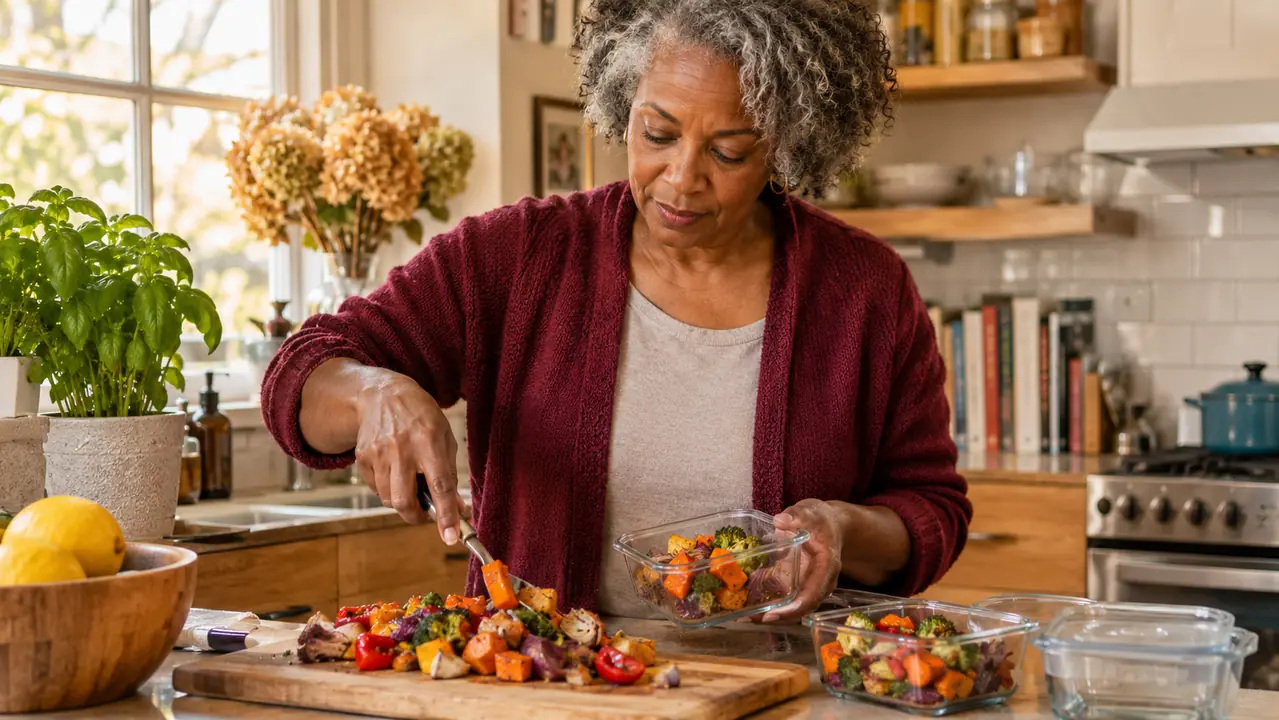
Sunday afternoon used to be the worst two hours of my week. Not the cooking. The standing in front of an open refrigerator at 6:30 on a Tuesday, hungry, with the dog staring at me and no plan. I would eat whatever was fastest, and it was never the thing I had intended to eat. I am 61, I live in Asheville with my husband Dale and our dog Mabel, and I started changing how I ate in my late fifties after my doctor flagged my blood pressure. No dramatic overhaul. I measured things. I walked Mabel every day. And I changed my kitchen, which turned out to matter more than any plan I ever bought. The change that stuck was glass containers, specifically the Rubbermaid Brilliance 3.2-cup set, four bases with lids, and the Sunday routine I built around them.
I am not a dietitian and I will not pretend to be one. Talk to your doctor before you change how you eat or how you move, especially if you have a health condition or take medication. What I can tell you is what worked in one small kitchen in western North Carolina, slowly, over a couple of years. Results vary, and anyone who tells you otherwise is selling something.
Four containers, one Sunday, a week of decisions already made
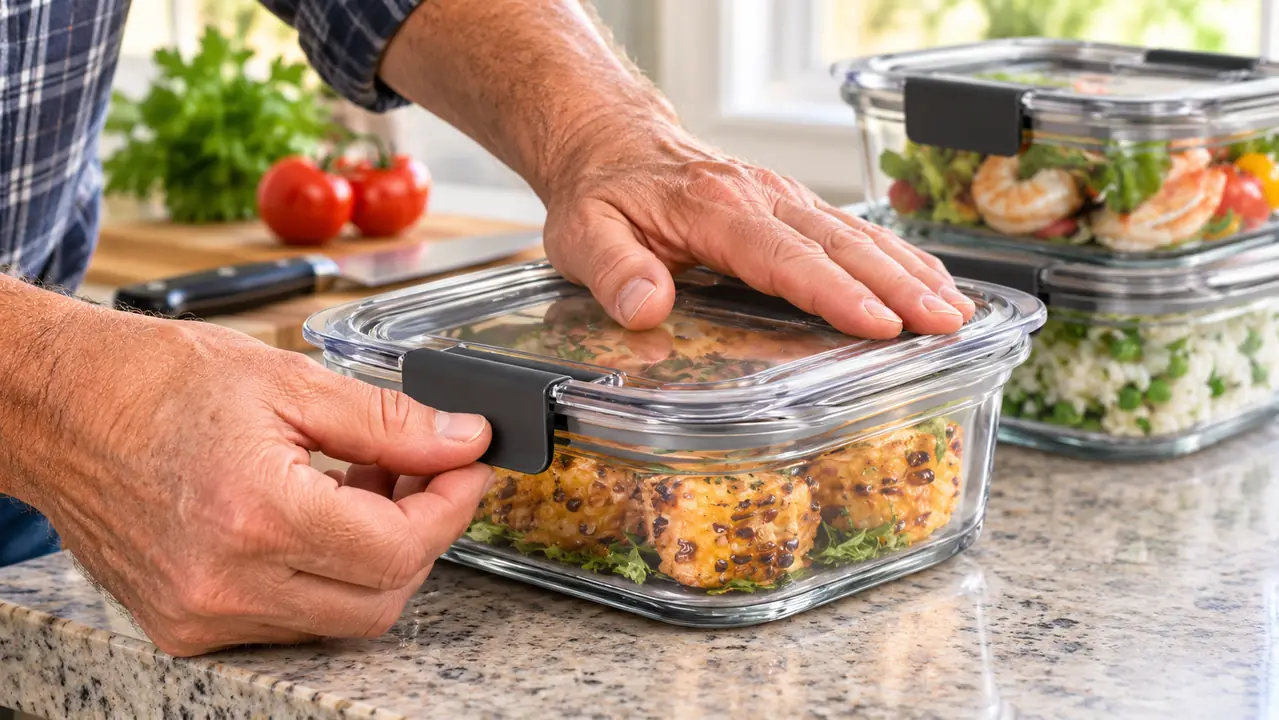
This is the set I use: 3.2-cup glass bases with airtight latch lids that stack instead of turning the fridge into a game of Jenga. The glass goes from oven to fridge to microwave, and the lids go in the dishwasher.
Amazon Check Today's Price on Amazon →Step 1: Count the meals you actually eat at home
I used to plan seven dinners and cook three, then throw out the rest of the produce on Thursday with a lot of guilt. Now I count first. Four lunches for the workdays. Four dinners that reheat well. That is eight portions, and it is exactly two rounds of the four-container set. No spreadsheet. No app. A number I can hold in my head.
I write it on the back of an envelope stuck to the fridge: protein, vegetable, starch, and whatever Dale will eat without complaint. He is not a picky man, but he will not eat the same thing five days running, and pretending otherwise wasted food for years. If your house is the same, plan two proteins instead of one and alternate them.
The first month I got this wrong in a specific way. I planned for the person I wanted to be, who would eat lentil soup four days running and be grateful for it. She does not live here. I made a pot in early March, packed four containers, ate one on Monday, and pushed the other three into the freezer by Thursday. What I learned was to count what I finish rather than what I intend. So I looked back over two weeks and wrote down every meal I had eaten at home and genuinely enjoyed. It came to eleven, and eight of them had a protein, a vegetable and something starchy kept separate. That became the plan, because it was already the truth.
The 3.2-cup size matters more than I expected. It is a real meal for me, not a snack, and it does not leave the empty space a second helping used to fill. If your portions are larger, plan on two containers at lunch and count that honestly rather than packing one and going back for crackers at three.
Step 2: Cook components, not finished meals
A finished meal in a container tastes tired by Wednesday. Components do not. I roast a tray of vegetables at 425 degrees F, which is comfortably under the 450 degrees F the glass bases are rated for, and I cook a protein and a grain in separate batches. Sunday is about an hour and a half of work, most of it oven time I spend quilting.
The glass bases go straight into the oven and the lids stay in the drawer. That is the whole reason I moved away from plastic. I roast in the same dish I store in, and I am not scraping a baked-on mess out of a pan at nine at night. It also means fewer dishes, and I will choose fewer dishes every single time.
Before the Rubbermaid set, I used rimmed sheet pans and then moved everything into whatever containers were clean. The sheet pans were fine. The transferring was not, because it added a step and a sink full of washing up to a day I already resented. Now two glass bases go side by side on the middle rack, which is about all a modest oven holds comfortably, and a third takes the grain cooked on the stovetop. Forty minutes for the vegetables, twenty-five for the chicken, twenty for rice. I set three timers and I do not open the door to peek, because every time I open it I lose heat and add five minutes. Vegetables low, protein high, and swap the two halfway through.
Then I mix and match during the week. Chicken and roasted vegetables over rice on Monday. The same vegetables with beans and a little feta on Wednesday. It feels like two different meals because it is. Dale adds hot sauce to his, which I have stopped taking personally.
Step 3: Let it cool before the lid goes on
This is the step I skipped for my first month, and it is why I briefly decided glass containers were useless. They were not. I was latching an airtight lid onto hot food and trapping the steam, then opening a container of gray, wet vegetables on Tuesday and blaming the container. The lid did exactly what the lid was built to do.
Twenty to thirty minutes on the counter, spread out rather than piled up. Then the latch goes down. The lid seals properly, the food does not sweat, and Wednesday's broccoli still looks like broccoli. In summer I set a timer, because I will otherwise wander off and find it at bedtime.
The night I finally understood this was a Sunday in October. I pulled roasted carrots and chicken out at 5:40, had four lids latched by 5:45, and put them in the fridge before I took my apron off. Tuesday at noon I opened one and found an inch of water in the bottom and carrots gone soft and pale. I sat at the table convinced I had bought the wrong containers. Dale asked whether I had let them cool first. I had not. The next week I set the bases on a folded towel, uncovered, and walked Mabel. Thirty-five minutes later I latched them. That Thursday the carrots were still carrots. Nothing about the container changed. The order of two steps did.
I also portion before I refrigerate, not after. A full container cools more slowly than four smaller ones, and portioning while everything is still on the counter means I am not standing over the open fridge with a serving spoon later, grazing. That grazing was a real habit of mine, and the container gave me a place to put the food instead of my mouth.
Step 4: Pack the fridge in the order you will eat
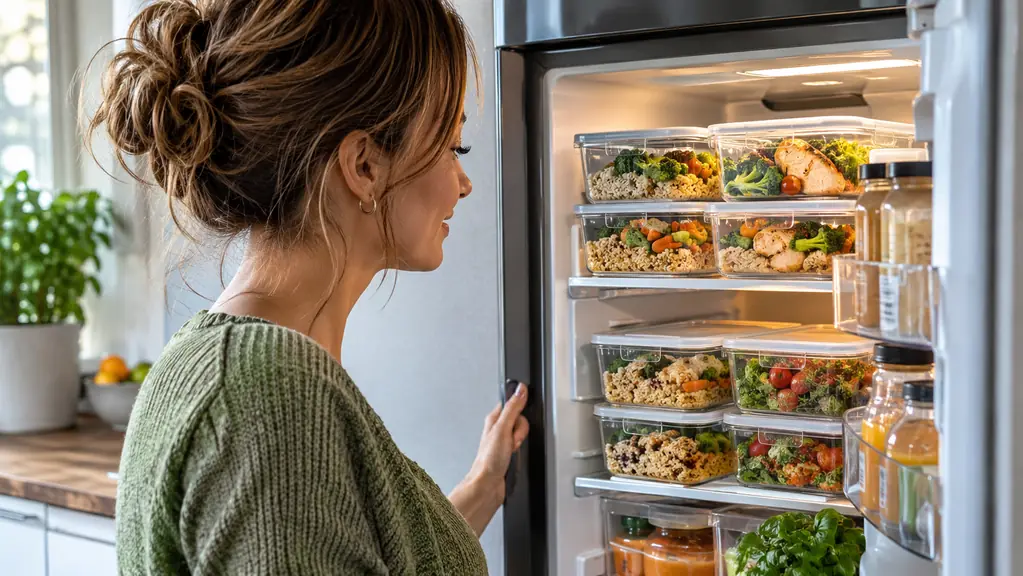
Monday and Tuesday go in front. Wednesday and Thursday go behind them. The rectangular, stackable shape makes this easy, and the lids are universal across every Brilliance container I own, so I am not hunting for the mate to a particular base at 6:40 in the morning. One drawer, one stack, one less decision.
Our fridge is a standard apartment-sized one and it is not generous. Before I started stacking properly, four containers ate an entire shelf, because I set each one down wherever there happened to be room. Now they go two high and two across on a single shelf, and the shelf above still holds the milk and the bowl of cut vegetables. The lids lie flat in a drawer, nested, because the universal fit means I genuinely do not care which lid belongs to which base. That sounds like a small thing. It is the difference between a system I keep and a system I abandon, and I have abandoned plenty.
I keep a roll of masking tape and a marker in the drawer and write the day on the lid. Not because I cannot remember, but because Dale can then see what is spoken for. It also settled a small, ongoing disagreement about leftovers that had been running in this house since the 1980s.
The leak-proof lid matters more than I expected. I carry one container in a tote bag with a book and a folder, and I have not had a spill since I stopped filling them to the brim. Leave a little headroom. A container packed to the top is a container you will regret in a car.
Step 5: Reheat and clean on the same day
The lids are vented and microwave safe, so I open the vent and heat the container with the lid on. That is what keeps the splatter off the inside of my microwave, and it means one less dish to wash. I used to transfer food to a plate, microwave it, and then wash the plate. That was a younger woman's routine.
Everything goes in the dishwasher at the end of the day. Glass, lids, the lot. Rubbermaid rates the whole set dishwasher safe, and I lean on that. A routine that requires special handling is a routine I will quit by the second week, which is the story of every other system I tried.
The one thing I baby is temperature. I do not put a cold glass base straight from the fridge into a hot oven, and I do not run cold water over one that just came out. It sits on the counter while the oven heats, or it sits in the sink until it reaches room temperature. I have never cracked one in three years of weekly use and I would like to keep that record. The glass is oven safe to 450 degrees F, but safe is not the same as careless.
What Else Helps
The containers did not do anything on their own. They made one decision on Sunday so that a tired woman on Tuesday did not have to make it while hungry. That is the entire mechanism. If you buy a set and keep ordering takeout, the set is just a tidy cabinet. I know because I own a bread machine.
What helped alongside it: walking Mabel every day, which was the only exercise I stuck with because she does not accept excuses. Measuring things instead of eyeballing them, for the first year especially. Keeping a bowl of cut vegetables at eye level in the fridge. And weighing myself in the hallway on the same morning each week, then not thinking about it again until the next one.
What did not help: four-hour Sunday marathons that left me exhausted and resentful. Buying twenty containers before I knew whether I would use four. Any plan that assumed I would suddenly enjoy cooking more than I do. And the very common idea that one big dramatic week would fix a habit that took me decades to build.
One more thing, and I say it to my sister whenever she asks. This is not a weight loss method. The containers do not care what is in them, and a 3.2-cup container holds exactly as much cake as it holds chicken and broccoli. What changed for me was that I stopped deciding at the moment of hunger, and that is worth building whatever the scale says. If you take medication or have a health condition, get your doctor's read on any change before you make it, not mine.
The containers did not make me lose weight. They made the decision once, on a Sunday, so I was not making it hungry on a Tuesday at 6:30.
If your Tuesdays look like my old Tuesdays, start with four
Not twenty. Four 3.2-cup glass containers with airtight lids, one Sunday, and a marker for the day on each lid. That is enough to find out whether the routine fits your life before you rearrange a cabinet around it.
Amazon Check Today's Price on Amazon →