

Here is the answer I would give a friend standing in the grocery aisle with me: the Rubbermaid Brilliance glass containers are the better choice if you reheat, roast, and eat out of the same dish, and plain plastic containers are the better choice if you need something that weighs almost nothing in a tote bag and you do not mind replacing it every so often. I have used both in the same kitchen for years, often on the same day. I pack a lunch most weekdays, I divide leftovers into portions before they go into the refrigerator, and I have dropped things on the tile floor beside the sink more than once. What follows is what actually separated the two for me, in the order it mattered, with the parts I do not love included.
The set I am writing about is the Rubbermaid Brilliance 3.2-cup rectangular containers, four bases and four lids, eight pieces total. The bases are glass. The lids are plastic, they latch at both ends, and the listing describes the seal as airtight and leak proof, with lids that are also odor and stain resistant. The lids are vented, so steam escapes when you microwave instead of fogging the inside of the appliance, and the listing calls them splatter resistant. The bases are oven safe up to 450 degrees F, which means a container can go from cold leftovers to a hot oven without dirtying a second dish. Both parts are dishwasher safe, and the whole set weighs 6.9 pounds. That last number matters more than it sounds like it should, and I will come back to it.
| Rubbermaid Brilliance Glass | Plastic Containers | |
|---|---|---|
| Weight in a bag | 6.9 pounds for all four, so one full container has real heft in a tote | Light enough that you forget it is in there |
| Seal | Latch lids the listing calls airtight and leak proof, and mine have carried soup | Push-on lids that loosen with age, and I have mopped up dressing |
| Reheating | Vented lid listed as splatter resistant, so it goes straight into the microwave | Goes in fine, then holds the smell of chili for a week |
| Oven use | Bases are oven safe to 450 degrees F | Not oven safe at all |
| Stains and odors | Listed as odor and stain resistant, and tomato sauce rinses off the glass | Takes on color and smell, especially after reheating |
| The floor test | Glass can break, and I have lost one base to the tile by the sink | Bounces, and a crack in a lid is not a small event with a broom |
| Seeing what is inside | You look at the side and know what you packed | You open it and dig around |
| Lids that match | Universal lids fit across all Brilliance containers regardless of material | Every set has its own lid, and the drawer becomes a pile |
| Stacking in a cabinet | Modular rectangles stack in one column with no wasted air | Nests when empty, which saves space right up until they are full |
| Cleaning | Both parts are dishwasher safe | Most are dishwasher safe, and thin ones warp over time |
| Best for | Reheating, roasting, and eating from the same dish | Carrying, travel, and anything that might not come home |
Where Rubbermaid Brilliance Wins
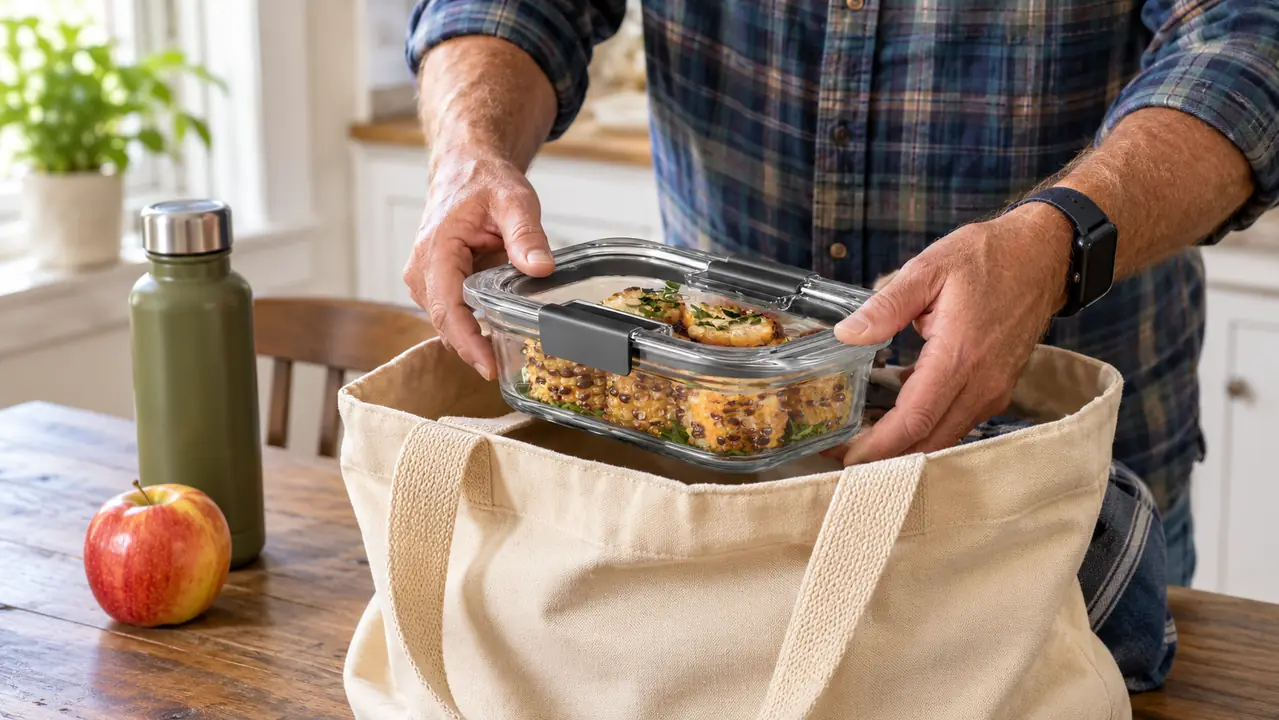
The latch is the whole argument. A plastic container with a push-on lid seems fine right up until the afternoon you tip your bag sideways and find salad dressing in the bottom corner. The Brilliance lids clamp down at both ends, the listing calls the seal airtight and leak proof, and the everyday translation is that I stopped double bagging my lunch. I have carried soup in one of these in a canvas tote across a parking lot and up a flight of stairs, and the bag stayed dry. That is the test I care about most, because a container that leaks has failed at the only job it had. The vented lid is the smaller thing I notice every day: steam goes out instead of condensing on the underside and dripping back into the food.
The second difference is the oven. Glass bases that are safe to 450 degrees F change how I cook for two people. I can roast a pan of vegetables in a container, let it cool on the counter, put the lid on, and stack it in the refrigerator without washing a sheet pan in between. Reheating happens in the same dish because the lid is vented, so I am not covering anything with a paper towel and hoping it stays put. Fewer dishes is not a small thing when you are the one who cooks and the one who cleans up. It also means I use the containers constantly instead of saving them for company, which is the real measure of whether a kitchen thing earns its shelf space.
A Tuesday in November is the example I keep coming back to. I had a head of broccoli, two chicken thighs, and about forty minutes before Dale got home. I tossed the broccoli with oil in one of the glass bases, put the thighs in another, and both went into the oven at 425. When they came out I set the lids on, and both containers went into the refrigerator as they were. No foil, no second dish to soak. Before I had these I would have used a sheet pan and then moved everything into plastic, which meant washing the pan and the plastic both, and standing at the sink at nine at night doing it.
Then there is what the material does over time. The listing describes the containers as odor and stain resistant, and in practice the glass does not hold onto tomato sauce, chili, or the turmeric I put in rice. I have owned plastic containers that smelled like last Tuesday's dinner no matter how many times they went through the dishwasher. Glass does not do that. It also lets you see what you packed without opening the lid, which sounds trivial until you are standing in front of an open refrigerator at noon trying to remember which container has the chicken in it. When you are paying attention to portions, that small bit of clarity is worth more than it sounds. You take the one you meant to take.
I have carried soup in one of these in a canvas tote across a parking lot and up a flight of stairs, and the bag stayed dry.
Where Plastic Containers Win
Plastic wins on weight, and it is not close. The whole set is 6.9 pounds. One full container in a tote bag is noticeable, and if you are walking Mabel, carrying a lunch, and holding a water bottle, you feel every ounce of it. Plastic is also what I reach for when the container is going somewhere it might not come back from. A cookout, a church supper, a plate of leftovers for my husband's brother. If a plastic container cracks or disappears, nobody mourns it. If one of the glass ones goes home with someone else, I notice, and I ask about it, which is not a great look at a family dinner.
The church supper is the other one. Our congregation does a covered dish dinner the first Sunday of the month, and I take a container of something and I fully expect to come home without it. Last spring I sent a plastic container of deviled eggs with Dale and it came back three weeks later with a note taped to the lid. That is the correct outcome for a church supper. I would not send one of the glass bases into that room, partly because I would spend the whole afternoon thinking about it and partly because the person who took it home would feel bad when they figured out what they had.
Plastic also survives the floor. I lost one glass base to the tile beside the sink and that was the end of it. Thin plastic bounces, and a cracked plastic lid is annoying rather than an event that requires a broom and a dustpan. If you have hard floors, if you carry containers in a bag with your keys, or if you are buying for someone who is rough on things, plastic is the honest recommendation. I keep a stack of it in the cabinet over the refrigerator for exactly those jobs, and I would not give it up. A kitchen where everything is precious gets used less, and a container you are a little bit afraid of is a container that stays in the cabinet.
The container that ended the double bagging
Four rectangular 3.2-cup glass bases with vented latch lids. Oven safe to 450 degrees F, dishwasher safe, and the lids fit every Brilliance container in the line.
Amazon Check today's price on Amazon →What the Listing Says, and What It Leaves Out
It is worth being precise about what arrives, because the set is smaller than the product photos suggest. Four containers at 3.2 cups each. To get a feel for that, picture a quart of yogurt and then picture three quarters of it. Or measure it once, the way I did the first week: two cups of cooked rice fills a little more than half a container, and a full one holds a generous lunch for an adult with room for a piece of fish on top. What it will not hold is a whole pork chop plus two sides, and it will not hold a batch of soup for four. Those are different containers. I ended up with a second set, which is probably the most useful thing I can tell you about the size. Do that math before you order, not after.
The lids are plastic, and the lids are the part that will wear first. That is true of any container with a latch, glass or not. The listing says the lids are universal across all Brilliance containers regardless of material type, which is a genuinely useful detail, because a cracked or misplaced lid is then a small problem instead of a reason to throw away a good glass base. I have not lost one yet, but I have matched lids to bases in a dim kitchen and been glad they all fit the same way.
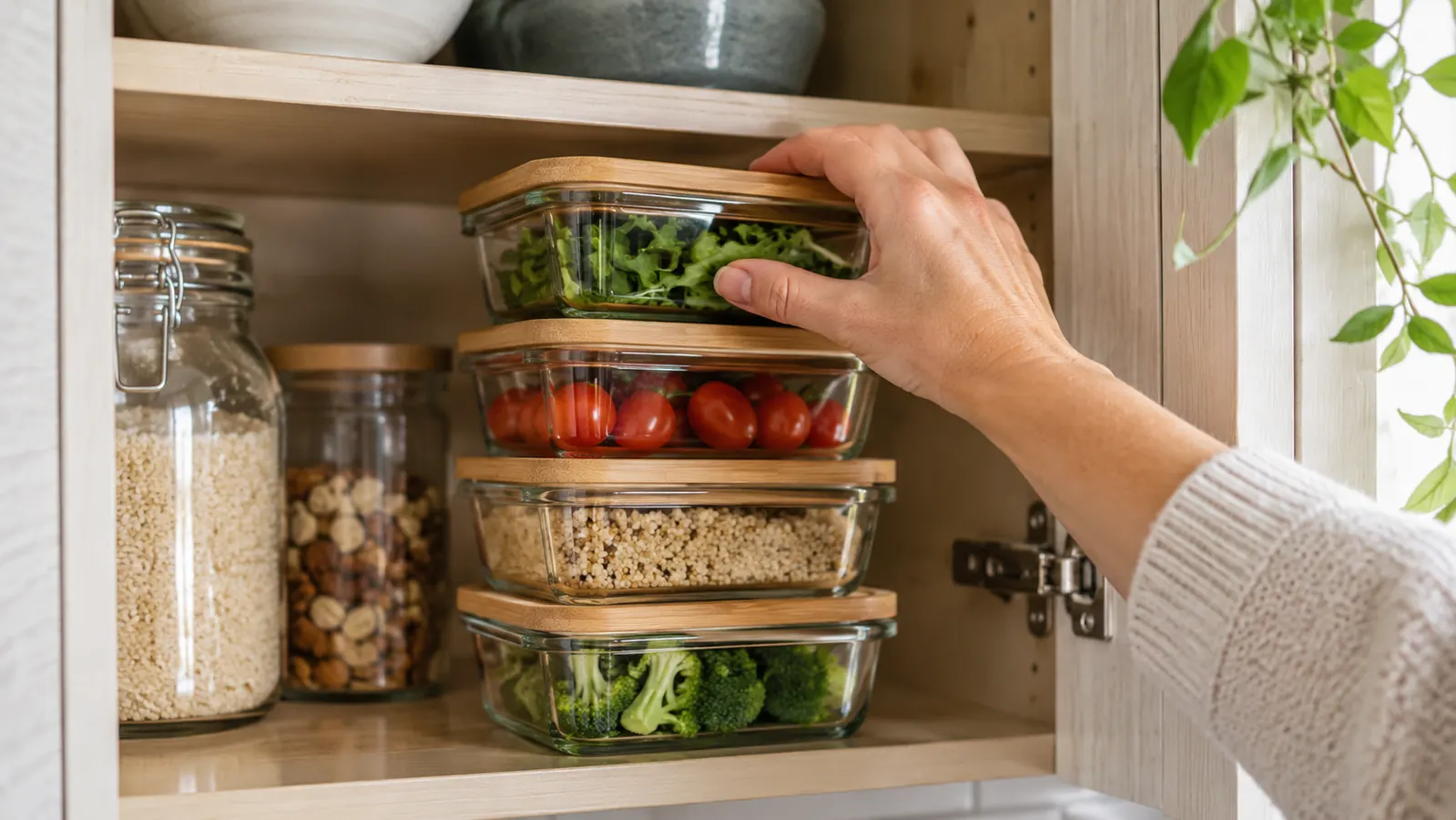
The listing does not make a freezer claim, so I do not treat it as one. Mine handles refrigerator storage, reheating, and oven roasting, and I leave freezing to containers that say they are built for it. That is not a knock on the product. It is me reading the listing instead of assuming. The rectangular form also stacks better in a cabinet than round containers do, because rectangles do not leave a column of wasted air between them, and the modular design means four of them sit in one tidy column on the shelf.
How the Containers Fit a Portion Habit
My doctor is the one who got me paying attention to portions, back when my blood pressure came back higher than either of us liked. I am not going to tell you what to eat or how much. I will tell you that for me, the container did more than willpower ever did. When I divide food into four 3.2-cup containers before I sit down, the amount is settled while I am still standing at the counter and thinking clearly, not while I am hungry and holding a serving spoon. The decision moves to a moment when it is easy, and it stays made.
The version of this that stuck was Sunday afternoon. I cook on Sunday, I let things cool on the counter while I put the rest of the kitchen back together, and then I divide everything into containers and stack them on the second shelf where I can see the row the moment I open the door. By Wednesday the row is shorter and I know exactly what is left for Thursday without opening anything. That is a small piece of information, but it replaced a lot of standing in front of the refrigerator with the door open, deciding nothing. Dale has started doing the same thing with his own lunches, which I did not expect.
Glass helps for a boring reason: I can see it. A row of containers on the shelf, each holding a portion I already measured, is a cue that plastic hides. I also stopped reheating in the pan I cooked in, which cut down on the picking at the edges that used to happen while I was cleaning up. None of this is dramatic. It is a kitchen arranged so the easy choice and the sensible choice are the same choice. If you have a health condition or you take medication, talk to your doctor before you change how you eat. That is not a line I am adding for form. It is how I did it.
Who Should Buy Which
Buy the Rubbermaid Brilliance set if you reheat in the same dish you store in, if you roast vegetables in small batches, if you are tired of tomato sauce living permanently in your plastic, and if you want to see your portions without lifting a lid. Buy plastic containers instead if weight matters more than anything else, if the container leaves the house with some risk of not coming back, if you have hard floors and a habit of dropping things, or if you are setting up a first kitchen and want volume more than longevity. Most kitchens I know, mine included, end up with some of each. The glass ones are the ones I reach for every single day, and the plastic ones do the jobs I would not hand to glass.
Start with four and see how often you reach for them
If glass survives a month in your kitchen, it will survive for years. The 3.2-cup rectangular set is the size that fits a lunch and stacks in a cabinet.
Amazon Check today's price on Amazon →