
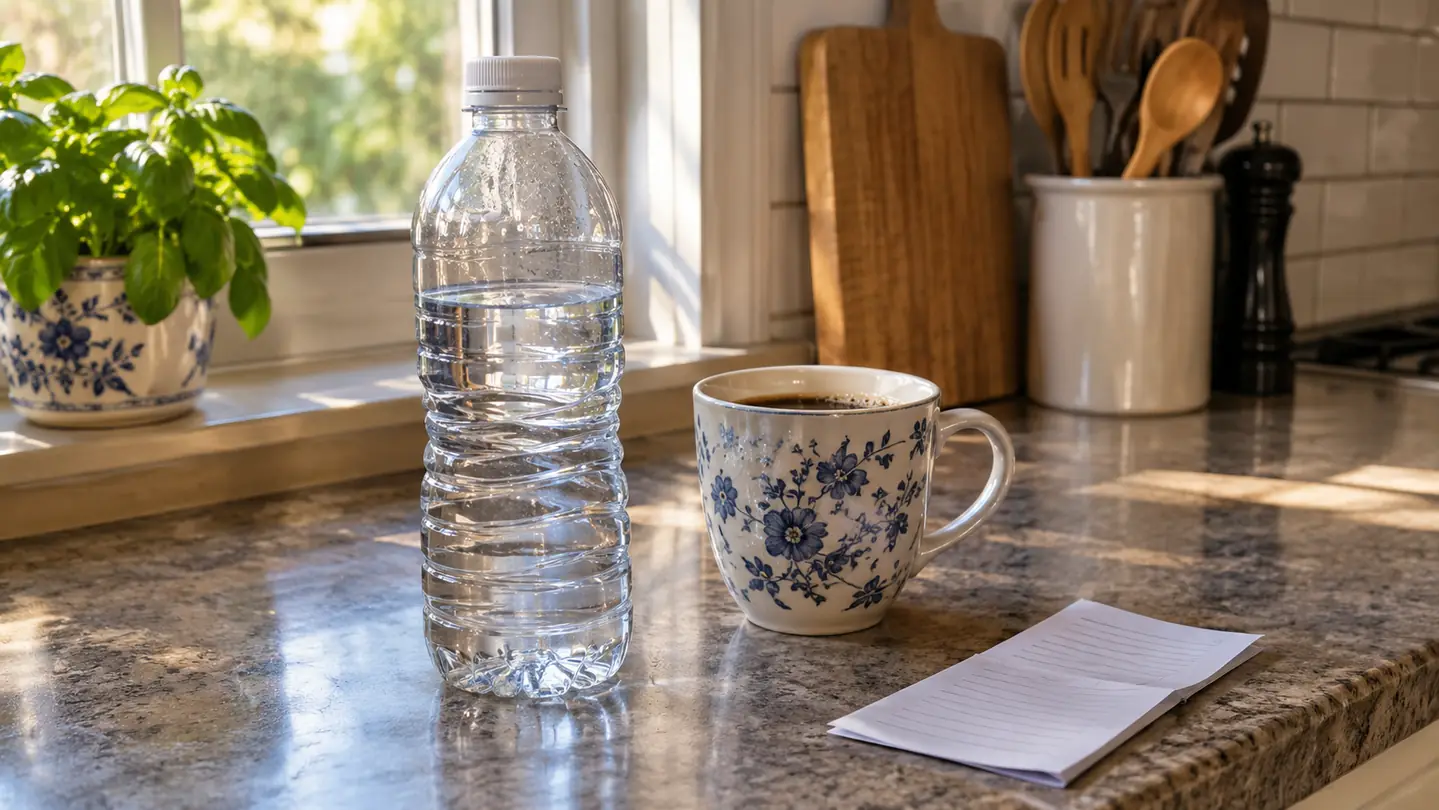
I have bought four water bottles in my adult life and three of them ended up in the cupboard under the mixing bowls. The fourth one worked, and I want to be honest about why. It was not discipline. I am 61, a retired school librarian in Asheville, and I started changing how I eat in my late fifties after my doctor flagged my blood pressure. Water was the smallest change I made, and it is the only one that never really lapsed. The bottle that stuck is an Owala FreeSip, 24 ounces, and the plain truth is that it did not make me drink more water. What it did was remove the small excuses I had been using to skip it.
The excuses were boring and constant. The tap water in our kitchen tastes faintly of pennies, so I wanted it cold. A bottle that sweats leaves a ring on the table. A lid that takes two hands is a lid I will not open while I am holding a leash. And a bottle you have to think about is a bottle you will abandon by the second week of February. Talk to your doctor before you change how much you drink, especially if you take medication or have a heart or kidney condition. Mine gave me a target that was not the number I had assumed, and that conversation came before any bottle did.
The bottle that stopped living in the cupboard
Owala FreeSip, 24 ounces: a push-button lid, a built-in straw you can sip from upright or a spout you can tilt to swig, and a carry loop that doubles as a lock. Triple-wall insulated stainless steel. Hand wash only. It will not drink the water for you, but it takes away the reasons you were not.
Amazon Check Today's Price on Amazon →Five Steps That Stuck With Me
Step 1: Choose a Bottle You Can Open With One Hand
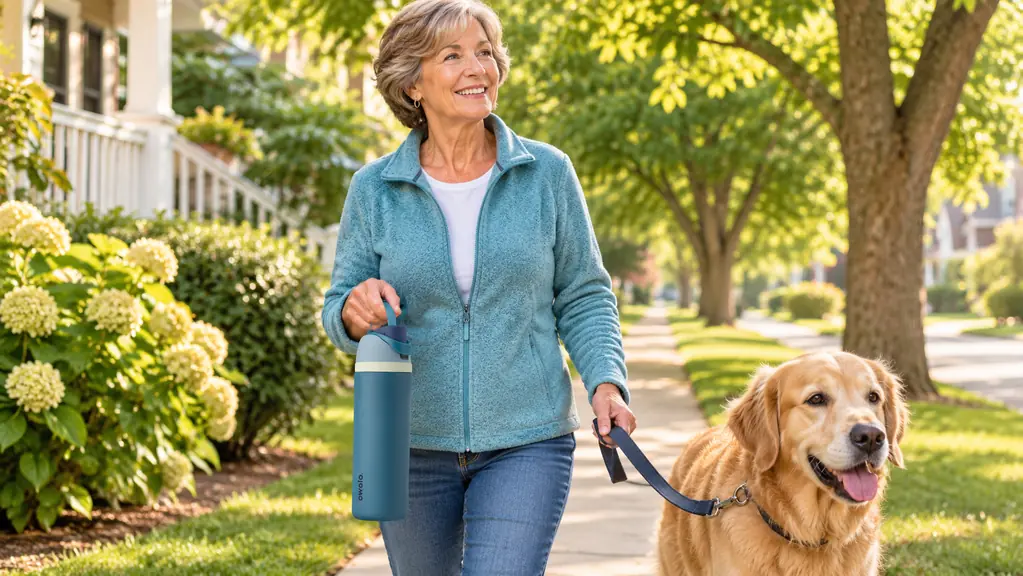
This sounds like a small thing and it is the whole thing. For two years my water bottle had a screw lid, and I drank almost nothing out of it, because opening it meant stopping whatever I was doing. The Owala lid opens with a push button, so I can work it with the hand that is not holding Mabel's leash. Mabel is our seven-year-old retriever-shepherd mix, about seventy pounds, and she does not believe in standing still. The spout cover keeps the drinking surface out of the dust in my tote bag, which mattered to me more than I expected it to.
The other half of this step is the carry loop. On the FreeSip the loop doubles as a lock, so the lid cannot pop open in a bag or on the passenger seat. I hook one finger through it when I walk, and the bottle comes with me instead of sitting on the counter getting warm. If you are choosing between bottles in a store, open and close each one ten times. Whichever one you can work without looking down is the one you will still be using in March. Everything else is decoration.
Before the FreeSip I tried a wide-mouth bottle with a screw cap and a neoprene sleeve, and I want to tell you exactly why it failed, because the reason was never the bottle. The sleeve soaked through on the second walk in July and left a wet patch down my jeans. The cap needed two hands and a firm twist, and Mabel does not permit firm twists. I still have it. It now holds the vinegar I use to clean the coffee maker, which is a fine retirement for a bottle that was never going to leave the house.
Step 2: Make the Water Cold Enough That You Notice It
I know how this sounds. Cold water is not a health strategy. But I am telling you what worked, and what worked was that cold water tastes like a treat and room-temperature water tastes like a chore. The Owala FreeSip is triple-wall insulated stainless steel, so it holds cold through a morning of errands and a long walk with the dog. I fill it at the sink before I start the coffee, and it is still cold when Dale and I sit down to lunch. That is not a laboratory result. It is just what happens in my kitchen.
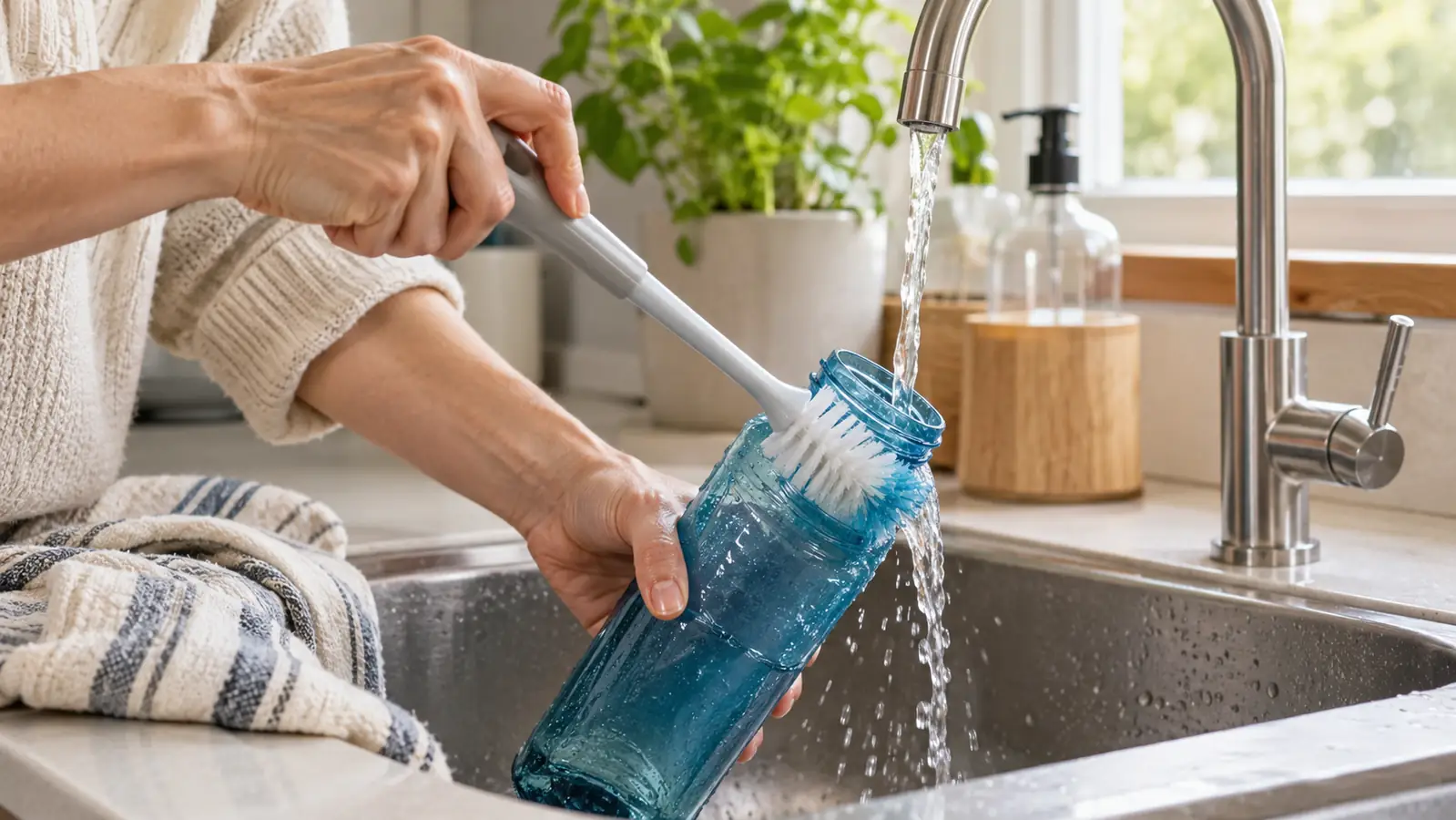
Two practical notes. First, this bottle is hand wash only, so it does not go in the dishwasher, and I had to build a small rinse into my evenings or it sat dirty until morning. Second, do not fill it to the brim if you plan to add ice, and do not leave it in a hot car all afternoon and expect it to still be cold at dinner. Insulation buys you hours, not a day. I still top it off once after lunch, and I have made peace with that.
Cold water is also how I stopped drinking so much sweet tea. I did not set out to quit sweet tea. I set out to have something cold within reach, and the something turned out to be water, because it was already there and already at the right temperature. That is the entire mechanism. For the record, I filled that bottle four times on the afternoon Dale and I drove over to Hendersonville in August, and twice on an ordinary day at the kitchen table. The amount moves with the weather and the errands, and that is fine.
Step 3: Park It Where You Already Sit
For years I put my water bottle where I thought a healthy person would put it, which was the far end of the counter, out of the way. Out of the way is the same as out of mind. Now it sits at the corner of the counter where I make my breakfast, and it goes to the little table by the window where I read the paper. The bottle lives in the rooms I actually use, not the rooms I imagine using. That one change did more than any promise I made to myself in January.
The car matters too. The FreeSip is slim enough to fit most cup holders, so it rides in the console instead of rolling around the floor mats and ending up under the seat with the grocery bags. That got me drinking on the drive to the store and back, which is twenty minutes I used to spend doing nothing at all. If you carry a tote, put the bottle in first and pack around it. If you forget it constantly, the answer is not a reminder app. The answer is a second bottle that lives in the car.
The hallway where the scale lives is exactly where a bottle should not go, and it took me a while to understand that. I do not want my water intake tangled up with the number on the floor. The bottle sits in the kitchen and by the chair where I quilt, and that is it. If you work at a desk, put it where your mouse hand rests, not across the room on a shelf where it looks tidy. Tidy is the enemy of used. A bottle on a sideboard looks like good intentions, and it behaves like one.
Step 4: Attach the Bottle to a Habit You Already Have
New habits fall apart because they are new. So I stopped trying to remember and started attaching. The bottle gets filled while the coffee brews, because I am standing at the sink anyway. It comes on Mabel's long morning walk, and I take a few swallows at the corner where she stops to sniff the same patch of grass she has sniffed for seven years. It sits on the table during meals. None of that is impressive. All of it is automatic now, which is the only part that counts.
Habit stacking is the unglamorous name for it, and it works because you are not adding a task, you are hanging a new behavior on an old one. Pick three things you already do every day without fail. For me it is coffee, the dog's walk, and sitting down to eat. Then the bottle simply becomes part of those three. Dale does the same with his afternoon pill, and he is not a man who ever carried a water bottle before he retired.
Step 5: Count Loosely and Stop Negotiating
I tried the apps that buzz at you. What finally worked was a sticky note and a pencil on the refrigerator door. Two fills of a 710 milliliter bottle before two in the afternoon is a number I can hit without thinking, and hitting it makes the rest of the day easy. I do not track ounces in a spreadsheet. I do not argue with myself about whether herbal tea counts. I do not weigh anything. If the goal takes more than three seconds to evaluate, it is already too complicated for a Tuesday.
Here is the part that surprised me. The negotiating was the problem, not the drinking. Every day I used to run a small debate about whether I was thirsty enough to bother, and the debate usually ended in no. When the bottle is full, in front of me, and the target is two fills, the debate is over before it starts. Please ask your doctor what amount is right for you, because it depends on your medications, your kidneys, and how much you sweat in an Asheville July. My number is mine.
I keep the sticky note simple on purpose. Three boxes, one for the morning walk, one for after lunch, one for the evening, and a pencil on a string beside it. That is the entire system. When I tried a printed log with ounces and times, I filled it in for nine days and then it joined the other papers on the fridge door that I had stopped seeing. What I am describing is not discipline. It is making the scoreboard so small that looking at it costs nothing. If you miss a day, you do not restart. You fill the bottle again after lunch and carry on.
What Else Helps
A few things helped alongside the bottle. I stopped buying cases of bottled water, which sounds unrelated until you remember that a case in the garage is a case you have to remember to bring upstairs. I rinse the bottle at the same time I refill Mabel's water bowl, so the two chores became one. And I walk the dog in the morning before it gets hot, which means I come back genuinely thirsty instead of forcing myself to drink out of duty. Thirst is a better motivator than a rule.
Two honest limitations. Twenty-four ounces is not enormous, so on a hot day I refill it three or four times. If you hate refilling, get a larger bottle and accept that it is heavier in your bag. And the push button means the lock matters. If you toss the bottle in a tote without clicking the loop over, you will find out the hard way. I did, once, onto a library book I had borrowed. I have not skipped the lock since.
Two fills of a 710 milliliter bottle before two in the afternoon did more for me than every reminder app I ever installed.
None of this is dramatic and none of it happened fast. I did not wake up one morning craving water. I noticed, months in, that I was making fewer trips to the kitchen for something to sip and that the bottle had stopped feeling like a project. Results vary, as my doctor keeps reminding me, and a bottle is one small piece of a much larger set of changes. It is not the change. It is the thing that makes the change easy enough to keep.
If your bottle is still in the cupboard, start there
The Owala FreeSip holds 24 ounces, opens with a push button, sips through a built-in straw or tilts to swig, and locks shut with the carry loop. Triple-wall insulated stainless steel, hand wash only. Buy the bottle, then use the five steps above in order.
Amazon Check Today's Price on Amazon →